A blocked kitchen sink drain is almost always a DIY fix in 2026 - grease, food scraps and coffee grounds are the usual culprits, and most clogs clear with hot water, a plunger or a P-trap clean-out inside 30 minutes.
- Hot water and dish soap clears most grease clogs in a kitchen sink drain within 10 minutes - try it first before anything else.
- A P-trap clean-out fixes clogs caused by food scraps or coffee grounds sitting near the sink - no chemicals needed.
- Chemical drain cleaners can eat through ageing PVC or metal pipework common in Melbourne homes built before the 1990s - skip them if you're unsure of your pipe age.
- If the clog returns within a week of clearing it yourself, tree roots or a deeper blockage are the likely cause - call Apex Drain Plumbing.
Why this matters
A slow or blocked kitchen sink is more than an inconvenience - standing grey water sits against your cabinet base and can warp timber or breed mould within days. Most kitchen sink clogs form in the trap or the first metre of pipe, which is exactly where a DIY fix works best without tools or a service call.
The trick is working through the fix in the right order. Skip straight to chemical cleaner and you risk corroding older pipework; skip straight to a plumber and you pay for a job that a plunger and ten minutes would've solved. This guide walks the order that actually works, and tells you honestly when to stop DIY-ing and call a plumber to clear a blocked drain fast before it floods.
What you'll need
- A bucket or basin to catch water from the trap
- A cup or sink plunger (not a toilet plunger - the flange is different)
- Baking soda and white vinegar
- A pair of channel-lock pliers or an adjustable wrench
- An old towel or rag
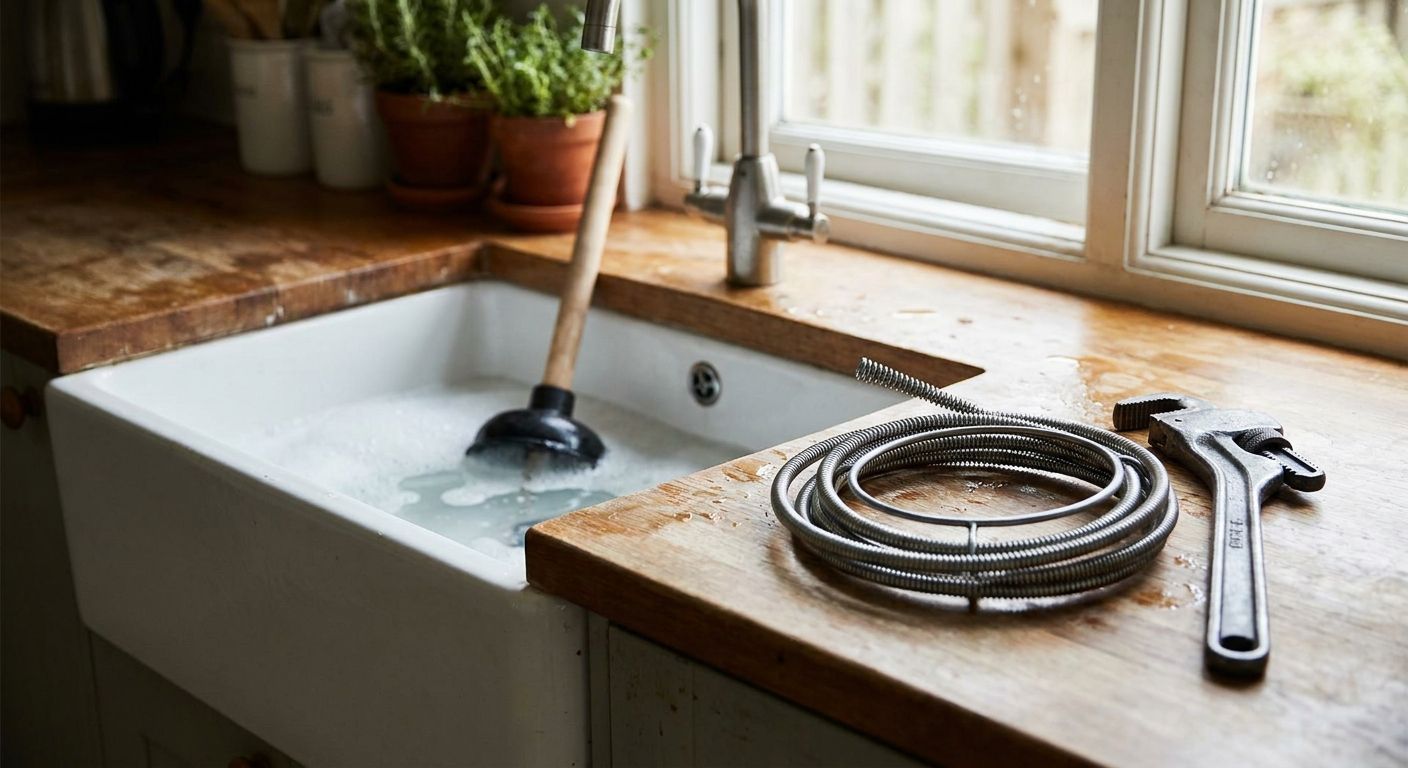
- A hand-crank drain snake (auger), optional but useful for stubborn clogs
- Rubber gloves
If your kitchen has a double sink or a garbage disposal fitted, note that both change how you troubleshoot - covered in the steps below.
The steps
1. Clear standing water and visible debris
Bail out any standing water in the bowl with a cup into a bucket, then pull out anything visible sitting in the drain opening with gloved fingers or tongs. This step accomplishes nothing fancy, but it stops you working blind and lets you see how fast (or not) the water actually moves once the bowl is empty.
Common mistake: skipping this and pouring hot water or baking soda straight onto standing water, which just dilutes it and wastes the flush.
2. Flush with boiling water and dish soap
Squeeze a generous amount of dish soap into the drain, then pour a full kettle of just-boiled water down slowly in two or three stages, waiting 20-30 seconds between pours. The soap breaks down grease film on the pipe walls while the heat melts solidified fat, and this alone clears the majority of kitchen sink clogs caused by cooking oil or butter.
Expected outcome: water should drain noticeably faster after the second pour. If it's still pooling, move to the next step.
3. Run a baking soda and vinegar flush
Pour half a cup of baking soda down the drain followed by half a cup of white vinegar, then cover the opening with a rag or plug to keep the fizzing reaction pushing down the pipe rather than back up. Let it sit for 10-15 minutes, then flush with another kettle of hot water.
This reaction is mild compared to shop-bought chemical cleaners, which is exactly why it's safer on ageing pipework across older Melbourne homes.
Common mistake: using cold water to flush afterwards - it re-solidifies any grease you just loosened.
4. Plunge the drain
Fill the sink bowl with a few centimetres of water so the plunger forms a proper seal, then block the overflow hole or the second bowl's drain with a wet rag so you're forcing pressure down rather than sideways. Plunge firmly 10-15 times in short, sharp strokes rather than slow pumps.
Common mistake: not sealing the second sink or overflow hole on a double-bowl kitchen sink - all your pressure escapes there instead of pushing the clog through.
5. Clean out the P-trap
Place your bucket directly under the U-shaped trap beneath the sink, then loosen the slip nuts on both ends with channel-lock pliers (hand-tight is usually enough - most residential traps don't need force). Slide the trap off, empty it into the bucket, and check for a solid clog of food scraps, coffee grounds or hair.
Rinse the trap under a tap, reassemble by hand-tightening the slip nuts, then run water to check for leaks before you walk away.
Common mistake: over-tightening plastic slip nuts with pliers - it cracks the threads and causes a slow drip weeks later.
6. Snake the drain
If the trap was clear but water still backs up, the clog sits further down the pipe. Feed a hand-crank drain snake through the trap arm opening, cranking clockwise as you push, and stop the moment you feel resistance rather than forcing it through the pipe wall. Draw it back slowly and you should pull out the clog material with it.
Expected outcome: water should drain at normal speed once the snake clears the blockage. If the snake meets hard resistance more than a metre in and won't budge, that's a job for a plumber, not more force.
7. Check the garbage disposal, if fitted
A jammed disposal presents exactly like a blocked drain. Hit the reset button underneath the unit first, then use the hex key (usually supplied with the unit) in the bottom centre socket to manually turn the flywheel both directions to free anything jammed.
Common mistake: reaching into a disposal by hand to clear a jam - always use the hex key or tongs, never fingers, even with the power off.
Troubleshooting
- Water still drains slowly after all steps - grease is coating pipe further down than a P-trap or snake reached; repeat the hot water and soap flush weekly to keep it from rebuilding.
- Gurgling noise when the sink drains - usually a venting issue, where trapped air is pulling water out of a nearby trap; if it persists after clearing the clog, the vent stack needs checking.
- Clog comes back within days - this points to tree roots or a partial pipe collapse further down the line, not a surface clog; see the guide on tree roots blocking drains below.
- Bad smell after the drain is clear - the P-trap has dried out and lost its water seal, letting sewer gas back up; run the tap for 30 seconds to refill it.
- One side of a double sink backs up when you use the other - the two bowls likely share a single trap; clear the shared trap rather than plunging each bowl separately.
- Plunger has no effect at all - check for a kinked or crushed trap arm under the sink before assuming the clog is severe; a bent pipe won't respond to plunging no matter how hard you push.
Tools and resources
- Hand-crank drain snake (auger) - available at any hardware store, reusable for future clogs
- Cup plunger with a flat flange, not a toilet (flange) plunger
- Baking soda and white vinegar - pantry staples that double as a mild, pipe-safe treatment
- If the kitchen sink clog is part of a wider slow-draining pattern in your bathroom too, the steps for clearing a blocked shower drain follow the same logic
- A torch, for checking inside the trap and down the pipe opening before you commit to snaking
Still blocked after trying this?
Licensed 24/7 emergency plumbers across Melbourne, upfront pricing.
What to do next
If the clog returns within a week of a full DIY clear-out, or your kitchen window looks over a mature tree, the problem is likely further down the line than a trap or a snake can reach. Read how tree roots gradually block drains to check whether that's what's happening at your property before you call anyone out.
FAQ
What's the best way to unclog a kitchen sink drain?
Start with a hot water and dish soap flush, then move to a baking soda and vinegar treatment, then plunge, then check the P-trap. Most kitchen sink clogs in 2026 clear at one of the first three steps without needing a snake or a plumber.
Is baking soda and vinegar better than chemical drain cleaner?
Yes for most household clogs, and it's safer on older pipework. Chemical cleaners can damage ageing PVC or metal pipes common in older Melbourne homes, while baking soda and vinegar is a mild reaction that won't corrode the pipe wall.
How much does it cost to call a plumber for a blocked kitchen sink in Melbourne?
Pricing depends on the job, time of day and whether it's an emergency call-out. Ask for upfront pricing before any work starts so you know the cost before the plumber picks up a tool.
Can you use a plunger on a double kitchen sink?
Yes, but you need to block the second bowl's drain with a wet rag first. Without that seal, plunging pressure escapes through the other bowl instead of forcing the clog through the shared pipe.
Why does my kitchen sink smell even after I've unclogged it?
A dried-out P-trap has lost its water seal, letting sewer gas rise back up through the drain. Run the tap for about 30 seconds to refill the trap and the smell should disappear.
How often should I clean my kitchen sink P-trap?
Every three to six months is reasonable for a household kitchen, more often if you regularly wash food scraps or coffee grounds down the drain. A quick hot water and soap flush weekly reduces how often you need to open the trap at all.
Is it safe to pour boiling water down a PVC drain pipe?
Yes, boiling water is safe for standard PVC kitchen drain pipe, though letting it run continuously for long periods on very old or already-damaged pipe isn't ideal. Pouring it in stages, as described above, is the safer method.
When should I call an emergency plumber instead of doing it myself?
Call a plumber if the clog returns within days of clearing it, if a snake meets hard resistance that won't budge, or if water is backing up into a second sink or the dishwasher. Those signs usually mean the blockage sits deeper in the pipe than DIY tools can reach.
One last thing
The single habit that prevents most repeat kitchen sink clogs is running hot water for 15-20 seconds after every wash-up, not just when something's already blocked - it keeps grease from cooling and sticking to the pipe wall in the first place. Fix the clog today, but that one habit is what stops you doing this again in a month.