A blocked drain that backs up fast can flood a bathroom or laundry within minutes, and knowing the right sequence of steps stops a slow trickle from becoming a call-out at 2am.
- Boiling water plus dish soap clears grease clogs in under 10 minutes for most kitchen sinks.
- A plunger seals and 15-20 second pumps shift standing water blockages in showers and floor drains.
- If water rises back within an hour after clearing, the blockage sits deeper in the line and needs a professional snake or CCTV check.
- Apex Drain Plumbing runs 24/7 across Melbourne for blockages that DIY tools cannot shift.
Why this matters
A blocked drain rarely stays a small problem. Water finds the weakest point in a pipe system, and once it can't move forward it pushes backward into sinks, showers, or floor wastes at ground level.
In 2026, most Melbourne homes still run on the same clay or cast-iron drainage laid decades ago, and those older pipes are far more prone to root intrusion and scale build-up than modern PVC. That's why a blockage that looks minor in a bathroom sink can actually be sitting further down the line, closer to the main.
Acting in the first 30 minutes usually means the difference between a $0 DIY fix and a flooded bathroom floor. The steps below follow the order a licensed plumber would try before reaching for a machine.
What you'll need
- A cup plunger (for sinks and floor drains) or a flange plunger (for toilets)
- A kettle or pot to boil roughly 2 litres of water
- Dish soap or 500ml of white vinegar plus a cup of baking soda
- A drain snake or plumber's auger if the sink or shower has a visible clog point
- Rubber gloves and an old towel
- Access to your main shut-off valve, in case water starts rising fast
- The number for a 24/7 emergency plumber like Apex Drain Plumbing saved before you start, in case the DIY steps don't hold
The steps
1. Stop adding water immediately
Turn off any running taps and stop flushing the toilet the moment you notice slow drainage. Adding more water to a partially blocked line pushes the clog further down and increases the chance of overflow. Common mistake: running the tap to "flush it through" — this is the single fastest way to turn a slow drain into a flood.
2. Boil water for grease and soap clogs
Pour roughly 2 litres of boiling water down the drain in two stages, waiting 30 seconds between pours. This works well on kitchen sinks where fat, oil, and soap scum have hardened along the pipe wall. Skip this step on PVC pipes under stress or if you've already tried a chemical cleaner, since the combination can warp fittings.
3. Try the baking soda and vinegar flush
Mix a cup of baking soda with 500ml of white vinegar and pour it straight down the drain, then cover the opening for 10 minutes while it fizzes. The reaction breaks down organic build-up without the corrosive risk of shop-bought chemical cleaners. Follow with another litre of hot (not boiling) water to rinse the loosened debris through.
4. Plunge with a proper seal
Fill the sink or shower basin with enough water to cover the plunger's rubber cup, then push down slowly before pumping hard for 15-20 seconds. A weak seal is the number one reason plunging fails — press down firmly on the first stroke to force air out, not in. Common mistake: plunging a double sink without blocking the second drain, which lets pressure escape instead of pushing the clog.
5. Run a drain snake for solid blockages
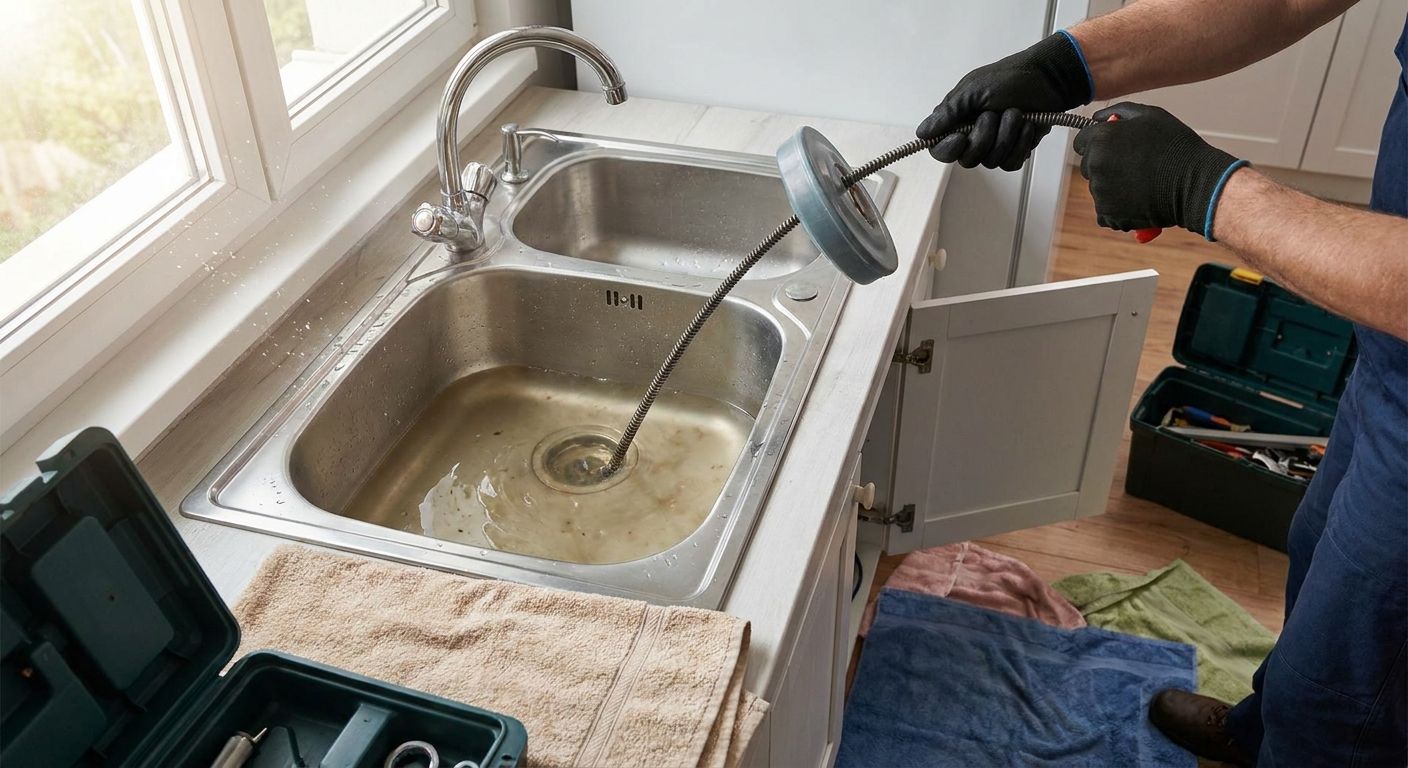
Feed a drain snake or plumber's auger into the pipe until you feel resistance, then rotate the handle clockwise to catch hair, wipes, or debris. Pull back slowly rather than yanking, since a fast retrieval can push loose material deeper instead of out. Most household snakes reach 3-5 metres, which covers the trap and first bend on most fixtures.
6. Check the external gully or floor drain
Outside gullies clog with leaves and silt, especially after Melbourne's autumn storms, and a blocked gully backs pressure up into internal drains. Clear visible debris by hand, then flush with a garden hose to confirm water is moving freely toward the street. If water pools instead of draining within a minute or two, the blockage sits further down the stormwater line.
7. Know when to stop and call a plumber
If water rises back within an hour of clearing, or if more than one fixture in the house is draining slowly at the same time, the blockage is deeper than a household tool can reach. Multiple slow drains almost always point to a main line issue, which needs a CCTV camera inspection to locate. This is the point where a licensed plumber becomes cheaper than repeated DIY attempts and a possible flood.
Blocked drain not clearing?
24/7 emergency plumbers across Melbourne for blockages DIY tools can't fix.
Troubleshooting
- Water drains slowly but doesn't stop entirely — this usually means partial buildup rather than a full blockage. Run the baking soda and vinegar flush weekly for a month before it becomes a full clog.
- Gurgling sounds from other drains when you flush — this points to a shared vent or main line issue, not a single fixture problem. Stop using water in the house until a plumber checks the main.
- Toilet blocks repeatedly within days of clearing it — recurring toilet blockages in homes built before the 1990s often trace back to root intrusion in the sewer line. A CCTV inspection identifies the exact spot without digging up the yard.
- Bad smell returns after clearing the drain — a lingering smell after the water flows freely again usually means a dry trap, not a new blockage. Run the tap for 30 seconds to refill the trap seal.
- Water backs up into a different room's drain — this is a sign the blockage sits in a shared section of pipe, not an isolated fixture. Treat this as an emergency and call a licensed plumber the same day.
- DIY chemical cleaner made it worse — stop using additional chemical cleaners once you've tried one, since mixing brands can produce fumes or damage older pipe joints. Flush with plain water and call a plumber if the blockage remains.
Tools and resources
Most of what you need for a first attempt sits in a hardware store aisle: a cup plunger, a short drain snake, baking soda, and white vinegar. For anything past step 5 above — repeated blockages, multiple slow drains, or a smell that won't go away — a licensed plumber with a CCTV drain camera and a high-pressure water jetter clears the line without guesswork. Apex Drain Plumbing runs blocked drain clearing as a 24/7 service across Melbourne and surrounding suburbs, alongside leak detection and burst pipe repairs for cases where the blockage has already caused damage.
What to do next
If the steps above haven't cleared the drain within 30-45 minutes of trying, stop before you flood the room. A blockage that resists boiling water, a plunger, and a snake is sitting in a section of pipe that needs a camera to locate. Booking a licensed plumber at that point in 2026 costs less than the water damage from a full backup, and it's the difference between a same-day fix and a bathroom floor that needs replacing.
FAQ
How do I clear a blocked drain fast at home?
Pour 2 litres of boiling water down the drain in two stages, then follow with a baking soda and vinegar flush if the water still drains slowly. Most soap and grease clogs clear within 10-15 minutes using this combination.
Is vinegar and baking soda enough to clear a blocked drain?
Vinegar and baking soda clears organic build-up like soap scum and light grease, but it won't shift solid blockages such as hair clumps or root intrusion. If the drain is still slow after two attempts, switch to a plunger or drain snake.
How much does it cost to clear a blocked drain in Melbourne in 2026?
Costs vary based on how deep the blockage sits and whether a CCTV camera inspection is needed to locate it. A licensed plumber can give an accurate quote once they've assessed the specific line.
Can a blocked drain cause flooding?
Yes, a blocked drain floods a room once water has nowhere to go and backs up through the nearest fixture, usually a floor waste or toilet. This happens fastest in bathrooms and laundries where multiple fixtures share one line.
Why does my drain keep blocking in the same spot?
Repeated blockages in the same spot usually mean a structural issue like a pipe dip, root intrusion, or a partial collapse rather than a new clog each time. A CCTV drain inspection finds the exact cause instead of guessing.
Should I use a chemical drain cleaner or call a plumber?
Chemical cleaners work on light soap and grease clogs but can damage older pipe joints if used repeatedly or mixed with other products. For anything that doesn't clear within one or two attempts, a plumber avoids the risk of pipe damage.
How do I know if a blocked drain is an emergency?
Treat it as an emergency if water is rising toward an overflow point, if multiple drains in the house are slow at once, or if sewage smell is present. In these cases call a 24/7 emergency plumber rather than waiting for a weekday appointment.
What causes most blocked drains in older Melbourne homes?
Homes with clay or cast-iron pipes laid before the 1970s are more prone to root intrusion and scale build-up than newer PVC systems. This makes recurring blockages far more common in older suburbs than in newer housing estates.
One last thing
The fastest fix isn't always the plunger — it's knowing which tool matches the clog. Grease and soap respond to heat and chemistry, hair and solids respond to mechanical force, and anything that keeps coming back after both is a sign the problem sits deeper than a household tool reaches. Skipping straight to a drain snake on a grease clog just pushes softened fat further down the pipe, so work through the steps in order rather than jumping to the strongest tool first.