A hot water system that gets serviced once a year rarely fails without warning — most breakdowns Apex Drain Plumbing sees in 2026 trace back to skipped maintenance, not bad luck.
- Test the TPR valve every six months and flush sediment annually — these two habits prevent most tank failures.
- Keep storage temperature at 60°C; anything lower risks legionella growth in the tank.
- Gas units need the pilot light checked when it won't relight on the first two attempts — that's a job for a licensed plumber, not a lighter.
- Watch for rust-coloured water, rumbling noises, or a constantly dripping TPR valve — all three mean the tank is on borrowed time.
- A tank running past 10-12 years old with no service history is a when-not-if breakdown. Book an inspection before summer or winter demand spikes hit it.
Why this matters
A hot water system failing at 6am on a Melbourne winter morning is not a minor inconvenience — it's a burst tank flooding a laundry, or a cold shower before work with no warning. Most tanks carry a working life of 8-12 years, and the difference between hitting that number and failing at year 5 usually comes down to whether anyone flushed the sediment out or tested the safety valve.
Insurance claims for water damage from failed hot water units are common precisely because owners treat the system as "install and forget." It isn't. Gas and electric storage units both have moving parts and consumable components that wear out on a schedule, and that schedule is knowable.
What you'll need
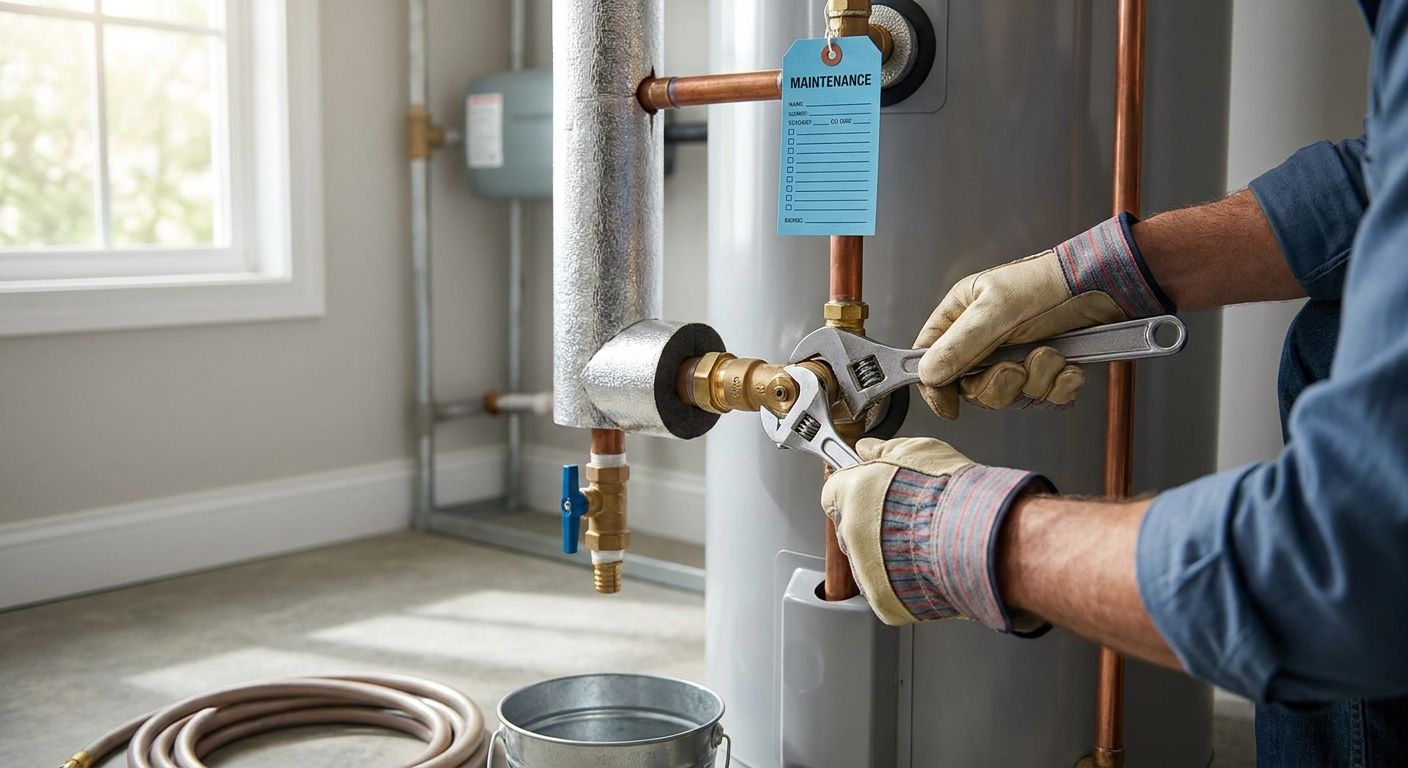
- Adjustable spanner or wrench (for the TPR valve test)
- A bucket to catch tank flush water
- A torch to inspect the pilot light and burner assembly (gas units)
- Access to the isolation valve near the tank
- A notepad or phone to log service dates — most owners forget when the last flush happened
- A licensed plumber on call for anode rod checks and gas component work — this isn't a DIY step
The maintenance steps
1. Test the temperature-pressure relief (TPR) valve every six months
The TPR valve is the single most important safety component on any hot water system — it releases pressure before the tank can rupture. Lift the test lever briefly and confirm water discharges through the overflow pipe, then check it stops fully once released. A valve that won't stop dripping, or one that produces no flow at all, needs replacing immediately, not next month.
Common mistake: owners assume a slow drip after testing is normal wear. It usually means the valve seat has debris on it or the valve itself has failed, and it should be actioned within days.
2. Flush sediment from the tank once a year
Melbourne's water carries mineral content that settles as sediment at the bottom of storage tanks. Left alone, this layer insulates the heating element or burner from the water above it, forcing the unit to work harder and shortening its life. Attach a hose to the drain valve, run 10-15 litres into a bucket until the water runs clear, then close the valve.
Common mistake: flushing a tank that hasn't been touched in 5+ years all at once. If sediment has hardened, an aggressive flush can dislodge scale into the drain valve and jam it half-open. Get a plumber to do the first flush on an older, neglected tank.
3. Check the sacrificial anode rod every 3-5 years
The anode rod corrodes on purpose — it's designed to sacrifice itself so the tank's steel lining doesn't rust through. Once it's eaten away to a bare wire core, the tank starts corroding instead, and that's the beginning of a leak you can't fix. This check requires draining the tank and unscrewing the rod, so it's typically bundled into a professional service visit rather than done solo.
4. Keep the storage temperature at 60°C
AS/NZS 3498 sets the benchmark for a reason: storage below 60°C lets legionella bacteria multiply inside the tank, while delivery at the tap should sit at or below 50°C to prevent scalding, usually managed through a tempering valve. Check the thermostat setting isn't drifting low, especially on older electric units where the dial can slip over years of vibration.
5. Relight a gas pilot light correctly, or call it in
If the pilot won't stay lit after two attempts following the manufacturer's instructions, stop. A pilot that keeps going out is often a sign of a faulty thermocouple or a draft issue, not something solved by repeated relighting. The guide to relighting a gas hot water system pilot light walks through the safe sequence step by step — if it still won't hold after following it, that's a parts issue, not a technique issue.
6. Check incoming water pressure annually
Residential water pressure in Victoria is capped at 500kPa under the plumbing code, but older suburbs and homes on a hill can run hotter than that without a working pressure limiting valve. High pressure stresses the tank's welds, fittings, and the TPR valve itself, accelerating wear across the whole system. If you haven't checked this in a while, the guide on how to reduce water pressure to protect ageing pipes covers what a safe range looks like and how a pressure limiting valve fits into the setup.
7. Watch your water meter for hidden tank leaks
A slow leak from a corroding tank or a loose fitting doesn't always show up as a puddle first — it shows up as unexplained usage. Reading the meter before bed and again first thing in the morning, with no taps run overnight, is the fastest way to catch a leak before it becomes a flood. The full method is in how to read your water meter for hidden leaks.
8. Book a professional inspection annually, non-negotiable past year 8
DIY checks catch the obvious stuff. A licensed plumber checks the anode, inspects for corrosion at welds, tests gas pressure on gas units, and confirms the TPR valve's discharge pipe is still correctly routed. Past the 8-year mark, this stops being optional — tank failure risk climbs sharply once the anode is gone and corrosion starts on the steel itself.
Book a hot water system check today
Licensed, insured plumbers across Melbourne — upfront pricing, no surprise call-out fees.
Troubleshooting common hot water problems
No hot water despite the pilot light being on. The thermocouple has likely failed, or the gas valve isn't opening fully. This needs a plumber — don't keep relighting it hoping it self-corrects.
Rust-coloured water from the hot tap only. This points to a corroding tank or a spent anode rod, not the mains supply. Get the tank inspected before it starts leaking.
Rumbling or popping noises from the tank. Classic sign of sediment buildup boiling underneath the heating element. Schedule a flush — ignoring it accelerates element or burner wear.
TPR valve dripping constantly, not just during a test. Either the valve has failed or the tank pressure is genuinely too high. Both need attention within days, not weeks.
Water pressure fluctuating between hot and cold taps. Often a sign the pressure limiting valve on the main is failing, which puts uneven stress on the hot water tank's fittings.
Pilot light won't stay lit after a proper relight attempt. Stop trying manually — a failing thermocouple or a blocked pilot orifice needs parts, not persistence.
Tools and resources
- Adjustable spanner and a bucket for TPR valve testing and tank flushing
- A pressure gauge if you want to self-check incoming mains pressure before calling anyone
- A torch for visual inspection of the pilot assembly and burner chamber
- Apex Drain Plumbing for the annual professional inspection, anode replacement, and any gas component work that shouldn't be DIY
What to do next
If your system is already showing two or more of the troubleshooting signs above, don't wait for the annual service slot — a tank showing rust-coloured water and a dripping TPR valve at the same time is close to failure, not early warning. Book an inspection now rather than after a flood. For anyone unsure whether what they're seeing is a tank issue or a pipe issue elsewhere in the house, the Apex Drain Plumbing team can assess both in the same call-out.
FAQ
How often should a hot water system be serviced?
A hot water system needs a professional service once a year, with the TPR valve tested every six months in between. Past the 8-year mark, annual servicing becomes essential rather than optional as corrosion risk rises.
What temperature should a hot water tank be set to?
Storage temperature should sit at 60°C to prevent legionella growth in the tank, with delivery at the tap kept at or below 50°C via a tempering valve. Checking this once a year catches thermostats that have drifted low.
How long does a hot water system last?
Most storage hot water systems last 8-12 years with regular maintenance. Skipping sediment flushes and anode checks can cut that lifespan well short of 8 years.
Why does my hot water system make popping noises?
Popping or rumbling noises usually mean sediment has built up at the bottom of the tank and is boiling under the heating element. An annual flush prevents this from starting in the first place.
Is it normal for the TPR valve to drip water?
A brief discharge during a manual test is normal, but a valve that drips continuously outside of testing is not. That's either a failed valve or tank pressure running too high, and it needs attention within days.
Can I relight a gas pilot light myself?
Yes, following the manufacturer's sequence is generally safe for a first attempt. If it won't hold after two tries, the issue is usually a faulty thermocouple and needs a licensed plumber rather than repeated relighting.
What causes rust-coloured hot water?
Rust-coloured water from the hot tap only points to a corroding tank or a spent sacrificial anode rod. This is an early warning sign worth acting on before it becomes a leak.
Does high water pressure damage a hot water system?
Yes, pressure above the 500kPa cap set under the Victorian plumbing code puts ongoing stress on tank welds, fittings, and the TPR valve. A pressure limiting valve on the main protects the whole system, not just the tank.
One last thing
The anode rod is the cheapest insurance in the entire system, and it's the part almost nobody checks until the tank is already leaking. Replacing it every 3-5 years costs a fraction of a full tank replacement, and it's the single maintenance item most likely to be skipped because it's out of sight, inside the tank, doing its job quietly until it's gone.