A gas hot water system pilot light that won't stay lit usually means one of three things: a dirty thermocouple, a draft blowing it out, or a genuine gas supply problem — and one of these three is not a DIY job.
- Relight a gas hot water pilot light in under 10 minutes by turning the gas valve to pilot, holding it in, and lighting the flame for 30-60 seconds.
- If the pilot won't stay lit after three attempts, the thermocouple is worn — that's a parts swap, not a relight fix.
- Any gas smell during the process means stop immediately and call a licensed plumber — do not attempt to relight gas hot water pilot light.
- Standing pilot systems on older units need this manual reset after a power outage or gas supply interruption; sealed and electronic ignition units usually self-relight.
Why this matters
A gas hot water system with no pilot flame means no hot water, full stop — and in most Melbourne homes in 2026 that's still the majority setup for older installs. The relight process itself is simple and safe when the unit is in good condition. The risk isn't the match — it's ignoring a pilot that keeps going out, because that's the appliance telling you something is actually broken.
Melbourne winters see a spike in pilot light call-outs every year, mostly from units over eight years old where the thermocouple has worn thin or dust has built up around the burner assembly. Apex Drain Plumbing handles these as part of standard hot water repair work across Melbourne, and the pattern is consistent: a pilot that relights fine but drops out again within a day almost always points to a failing safety sensor, not user error.
What you'll need
- Your hot water system's user manual or the instruction panel on the unit itself (every model differs slightly)
- A long lighter or barbecue-style igniter — matches work but put your fingers further from the flame
- A torch or phone light to see the pilot assembly clearly
- 10-15 minutes, uninterrupted
- Good ventilation — open a window or door near the unit before you start
If your unit smells of gas before you've touched anything, skip the steps below entirely and get it checked by a licensed plumber first.
The steps
1. Locate the gas control valve and read the label
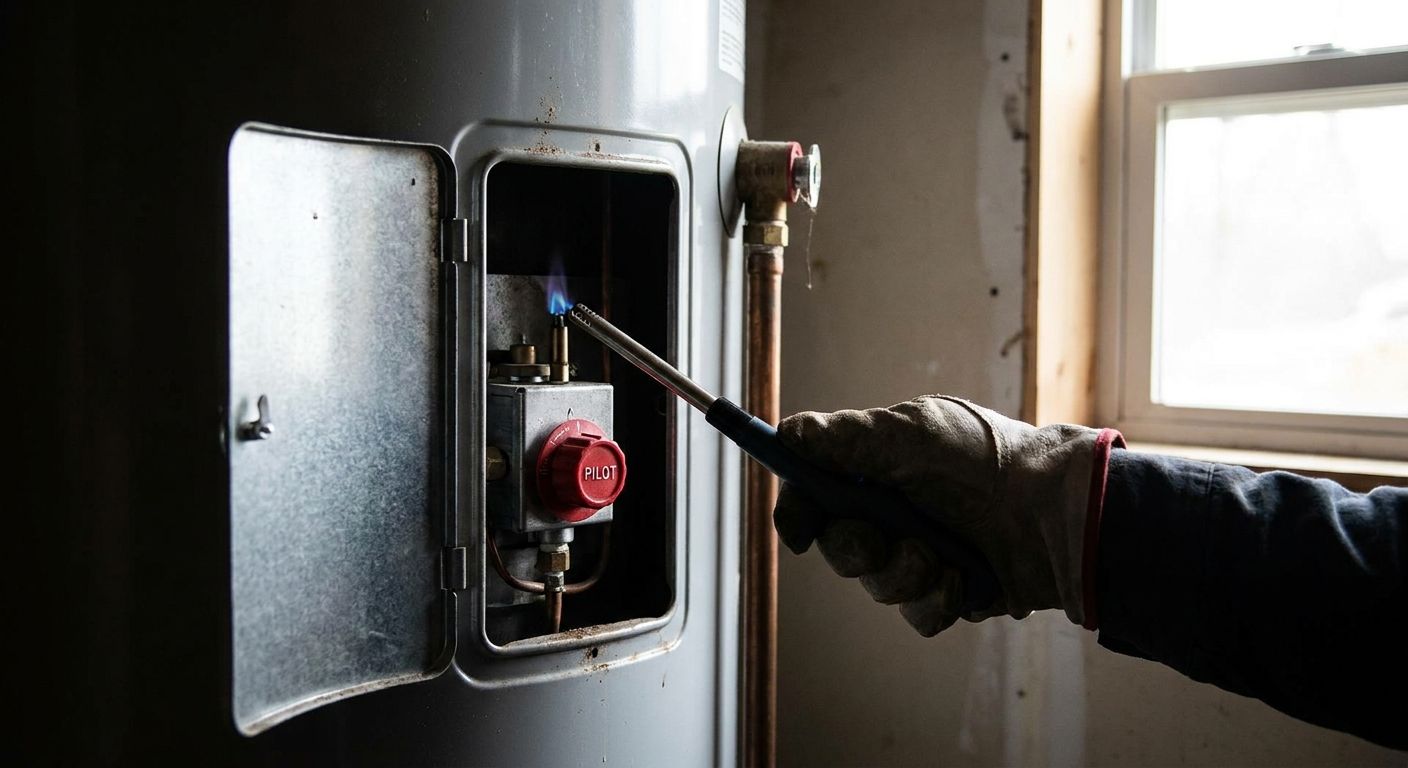
Every gas hot water system has a control knob with settings for Off, Pilot, and On, usually printed directly on the dial or on a plate beside it. Confirm which model you're working with before touching anything — Rheem, Rinnai, Dux and Bosch units all use slightly different pilot assemblies. Expected outcome: you can identify the pilot flame window (a small viewing glass or door low on the tank).
2. Turn the gas valve to Off and wait five minutes
This clears any residual gas from the line before you introduce a flame. Rushing this step is the single most common mistake — people turn straight to Pilot and light it immediately, which can cause a small flash-back at the burner. Set a timer on your phone for 5 minutes and actually wait it out.
3. Turn the valve to Pilot
This setting allows a small, controlled amount of gas to flow to the pilot burner only, not the main burner. You should hear or feel a faint hiss near the pilot opening. If you smell gas strongly at this point rather than a faint trace, stop and turn the valve back to Off.
4. Press and hold the pilot button while lighting the flame
Most systems require you to hold down the red or black igniter button as you apply the flame to the pilot opening — this keeps gas flowing to the pilot only while you get it lit. Hold the button down for 30 to 60 seconds after the flame catches; this gives the thermocouple time to heat up and register a safe flame. Releasing too early is the second most common mistake, and it's why pilots seem to "catch" then die straight away.
5. Release the button and check the flame holds
Once released, the pilot flame should stay burning steadily and blue, with maybe a small yellow tip. If it goes out the moment you release the button, the thermocouple isn't heating fully — repeat the hold once more for a full 60 seconds. Expected outcome: a small, steady flame visible through the viewing window that doesn't flicker or die.
6. Turn the valve to On
Once the pilot holds on its own for a minute or two, turn the main control valve to On. This allows gas to flow to the main burner, which will fire when your hot water tap or system calls for heat. Listen for the main burner igniting within a few seconds — a delay of more than 10-15 seconds after turning to On usually means the pilot flame isn't strong enough.
7. Replace any access panel and monitor for 10 minutes
Most systems have a lower access panel that needs to be reattached before normal use. Check the unit again after 10 minutes to confirm the pilot is still lit and the main burner cycles on and off correctly as hot water is drawn.
Troubleshooting
The pilot lights but goes out within seconds of releasing the button. The thermocouple isn't heating enough or has worn out — try holding for the full 60 seconds once more, and if it repeats, the thermocouple needs replacing.
You can't find or hear the pilot gas hissing at all. The pilot line itself may be blocked with dust or a spider's web — a known issue in units that sit unused over summer in Melbourne — and needs a professional clean rather than a relight attempt.
The main burner won't fire even though the pilot is lit. This usually points to a faulty gas valve or thermostat, not the pilot assembly, and is not something to force with repeated attempts.
You smell gas at any point during the process. Turn the valve to Off immediately, leave the area, ventilate the space, and call a licensed plumber before attempting anything else.
The pilot relights fine but goes out again within a day or two. This is a classic worn-thermocouple pattern — the unit is telling you it needs a part replaced, not another relight.
Your system has no visible pilot light at all. Newer electronic ignition and continuous flow units don't use a standing pilot — if hot water has stopped, the fault is electrical or electronic ignition-related, and manual relighting won't apply.
Tools and resources
- Your unit's manual (check the brand plate on the tank if you've lost the paper copy)
- A barbecue lighter with an extended nozzle
- A phone torch for the viewing window
- Apex Drain Plumbing for hot water repairs when the pilot won't hold after two attempts
If the fault turns out to be unrelated to hot water — say a slow drain backing up near the unit — that's worth sorting separately; a blocked drain that isn't cleared fast can cause water damage around a hot water cupboard just as easily as a gas fault can cause no hot water at all.
What to do next
If the pilot holds and the system runs normally for 24 hours, you're done — no further action needed. If it drops out again, stop attempting repeated relights and book a licensed inspection; a thermocouple swap is a 15-minute job for a plumber and a lot cheaper than a full system replacement, which most gas hot water units need somewhere around the 10-12 year mark.
FAQ
How do you relight a gas hot water pilot light safely?
Turn the gas valve to Off and wait 5 minutes, then switch to Pilot, hold the igniter button while lighting the flame, and keep holding for 30-60 seconds before releasing. If the flame holds, turn the valve to On to restore the main burner.
Why does my pilot light keep going out?
A pilot that won't stay lit is almost always a worn or dirty thermocouple failing to register a safe flame. Dust or drafts around the burner assembly are the other common cause, especially in units that sit idle over summer.
Is it safe to relight a gas hot water pilot light myself?
Yes, relighting a standing pilot is safe for most homeowners when there's no gas smell present and you follow the wait-then-light sequence. Stop immediately and call a licensed plumber if you smell gas at any point.
How long should I hold the pilot button when relighting?
Hold the igniter button for 30 to 60 seconds after the flame catches. This gives the thermocouple enough time to heat up and keep gas flowing to the pilot once you release the button.
Do all gas hot water systems have a pilot light?
No, older standing-pilot units do, but newer electronic ignition and continuous flow systems light automatically and have no manual pilot to relight. If a newer unit loses hot water, the fault is electrical, not the pilot.
What does it mean if the pilot lights but the main burner doesn't fire?
This usually points to a faulty gas valve or thermostat rather than the pilot assembly itself. Repeated relighting attempts won't fix it and a plumber needs to inspect the valve.
How much does it cost to fix a gas hot water pilot light in 2026?
A straightforward thermocouple replacement is one of the cheaper hot water repairs available in 2026, well below the cost of a full system replacement. Exact pricing depends on the unit brand and access, so get a specific quote before booking.
When should I stop trying to relight the pilot myself?
Stop after three failed attempts or at the first smell of gas, and call a licensed plumber instead. Forcing repeated relights on a unit with a genuine fault risks a bigger repair or an unsafe gas leak.
One last thing
Most pilot light call-outs in Melbourne aren't actually pilot light problems — they're thermocouple problems wearing a pilot light disguise, and the giveaway is always the same: it relights fine, then dies again within a day. Skip the third and fourth relight attempt and just get the part checked; it saves a repeat call-out and a cold shower the next morning.