A spinning leak indicator on your water meter usually means a leak, even if you can't see a drop of water anywhere in the house — this guide shows you exactly how to check water meter for leaks in under 30 minutes with tools you already own.
- A moving leak indicator with every tap off confirms a leak — get it checked before the next bill.
- Run a 15-minute no-water test to check water meter for leaks without guessing.
- A meter reading that climbs by more than a few litres with zero water use points to a hidden leak, sometimes a slab leak.
- Toilets and taps cause most silent leaks in Melbourne homes in 2026 — check them first.
- If the meter moves but you can't find the source, call a licensed plumber for leak detection rather than digging up the yard.
Why This Matters
A running toilet or a hairline crack in a buried pipe can waste hundreds of litres a week without ever showing up as a puddle. Melbourne water retailers bill quarterly, so a leak that starts in January might not show up as a cost blowout until the March bill lands — by then you've paid for months of wasted water.
Your water meter doesn't lie. It's the one honest measurement of everything flowing into your property, and reading it correctly tells you in minutes whether you have a leak, without opening a single wall. If the reading points to something underground, that's often a slab leak, which needs a plumber with proper leak detection gear, not a shovel.
What You'll Need
- A torch (most meter pits are dim, even at midday)
- A small brush or screwdriver to clear dirt from around the lid
- A notepad or your phone's notes app
- 15 to 30 minutes where no one in the house uses water
- Access to every tap, toilet, dishwasher, washing machine and irrigation controller on the property
The Steps
1. Locate Your Water Meter
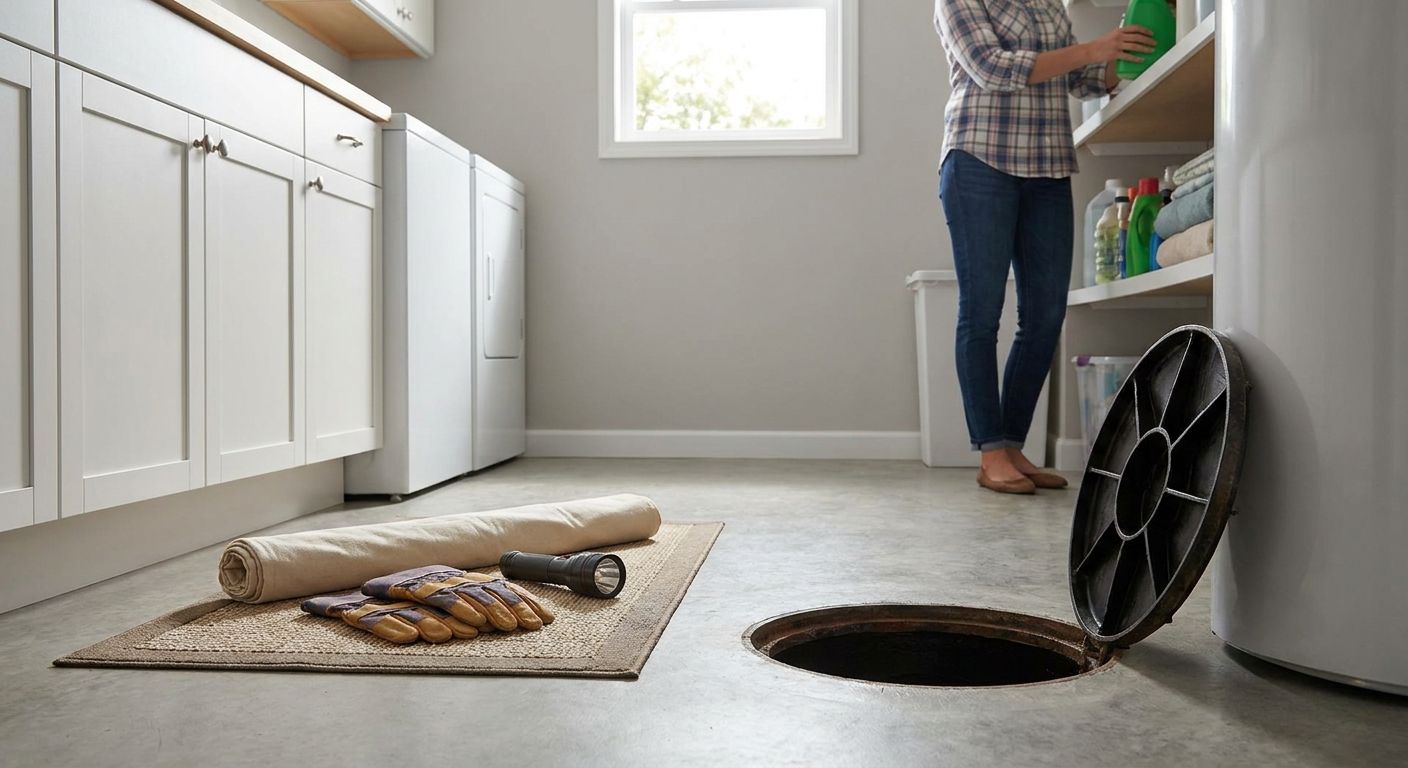
Most Melbourne properties have the meter in a small plastic or concrete pit near the front boundary, close to the footpath or driveway. Lift the lid with a flathead screwdriver — it's usually held by a quarter-turn or just friction.
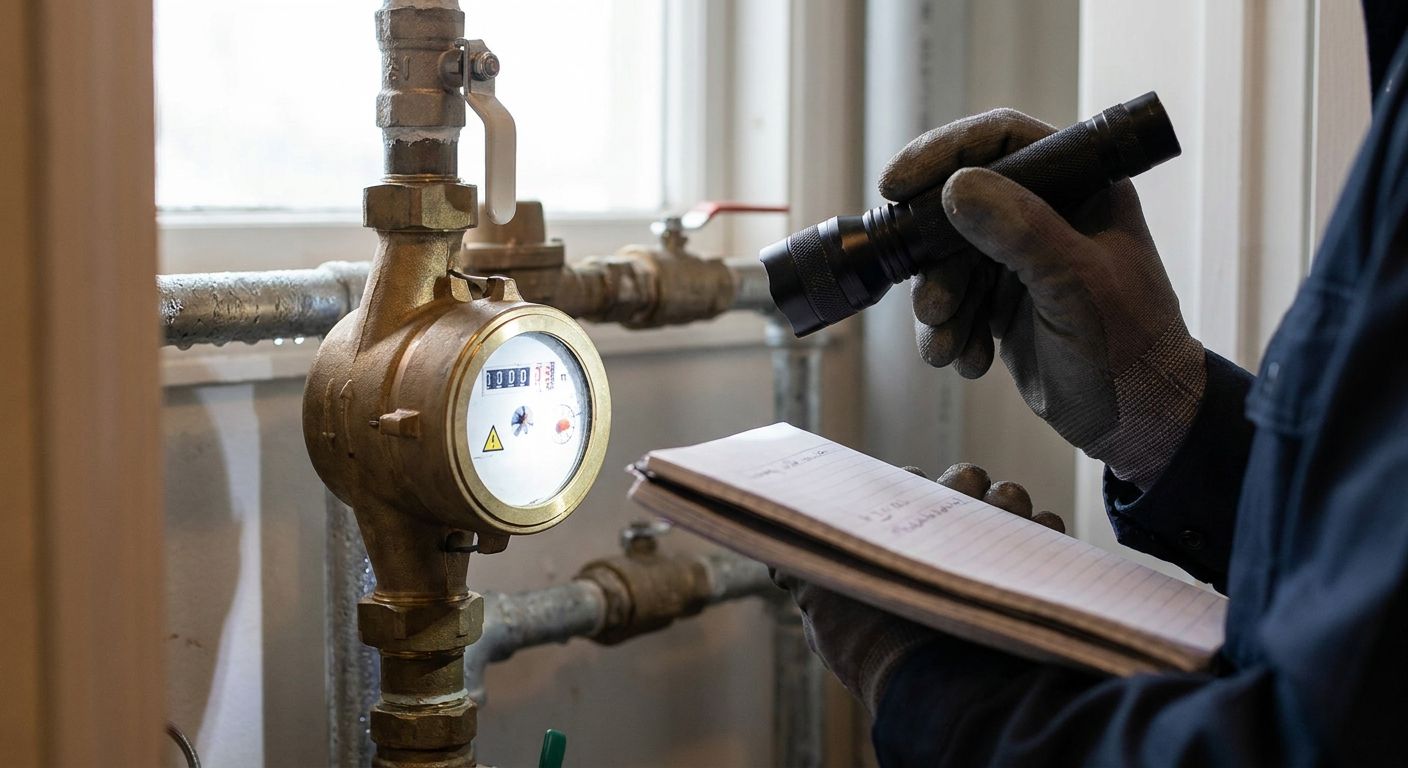
Expect a dial-style or digital display with a small red or black triangle, star, or spinner near the numbers. That symbol is your leak indicator, and it's the single most useful thing on the whole unit.
Common mistake: confusing the neighbour's meter with yours. Check for the property address or lot number stamped on the lid before you start.
2. Turn Off Every Water-Using Appliance
Shut every tap in the house, turn off the dishwasher and washing machine, disconnect hoses, and switch off irrigation controllers. Ice makers and evaporative coolers count too — anything plumbed in.
This step matters because even one dripping tap will make the meter move and give you a false positive. Give the house two full minutes of silence before you read anything.
3. Read And Record The Baseline
Write down the exact numbers shown, digit for digit, along with the time. If your meter has a leak indicator dial instead of digits, note its exact position — draw it if you have to.
This baseline is what every later reading gets compared against, so accuracy here matters more than speed.
4. Watch The Leak Indicator For 2 Minutes
With everything off, stare at that small triangle or dial for a full 2 minutes. Any movement at all — even a slow creep — means water is flowing somewhere on your property right now.
If it's dead still, that's a good sign, but it doesn't rule out a very slow leak. Move to the timed test below to be sure.
5. Run The 15-Minute No-Water Test
Leave the property completely water-free for 15 minutes. No flushing, no taps, no appliances starting on a timer. Set a phone alarm so you're not tempted to check early.
After 15 minutes, read the meter again and compare the digits to your baseline from Step 3.
6. Do The Maths
Any change in the numbers over 15 minutes with zero water use is a leak. On most residential meters, one full rotation of the small dial equals a fixed volume (often 1 or 10 litres depending on the meter model), so even a small shift tells you real water moved.
A change of a few litres over that window is usually a running toilet flapper or a dripping tap. A steady climb of double digits points to something bigger — a pipe fitting, an irrigation line, or a slab leak.
7. Isolate The Source Room By Room
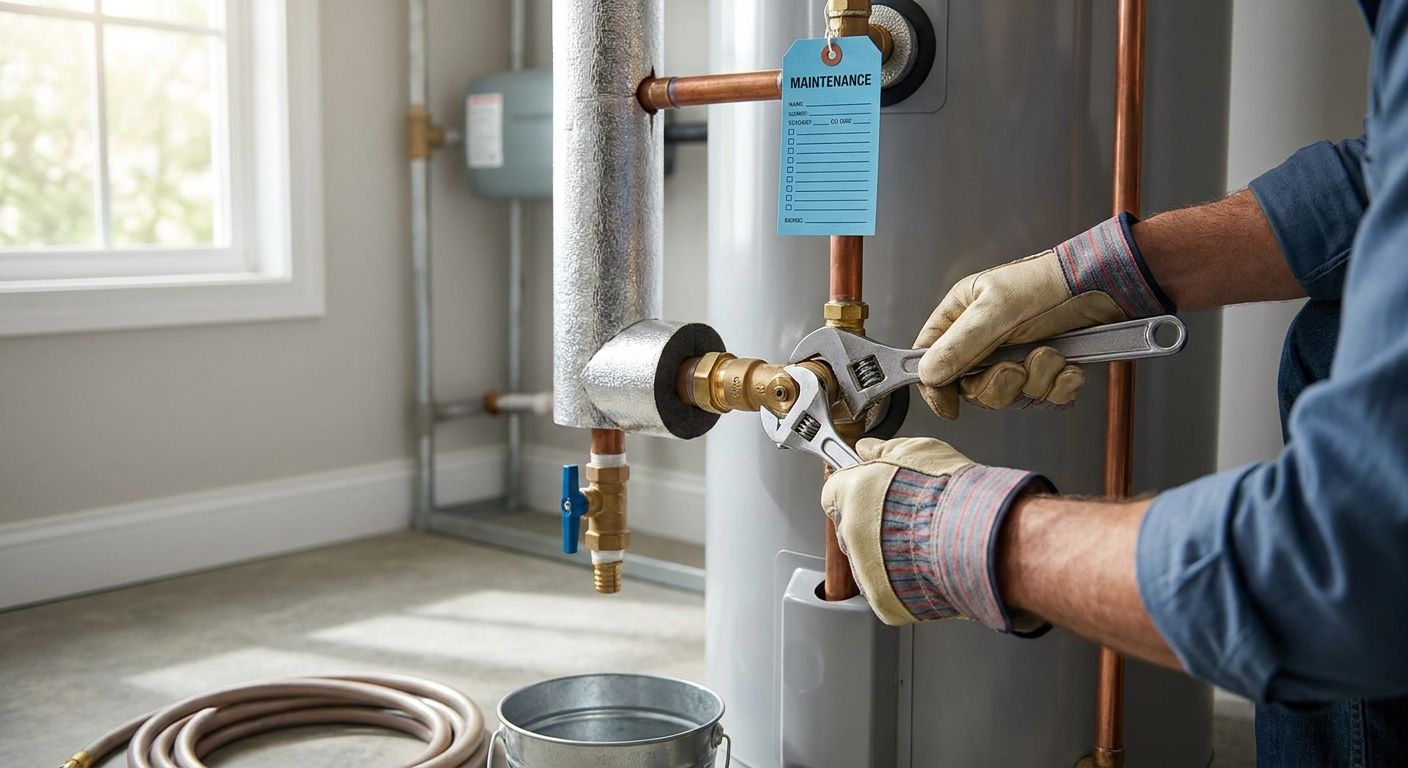
With the leak confirmed, shut off the isolation valve under each toilet and tap one at a time, rechecking the meter after each. When the movement stops, you've found the fixture.
If shutting off every internal valve still leaves the meter moving, the leak sits between the meter and the house — that's underground pipe, and it's a job for a licensed plumber, not a DIY fix.
Troubleshooting
Meter spins but every tap is confirmed off. Check the toilet cistern first — a worn flapper valve is the single most common silent leak in Melbourne homes. If tightening or replacing it doesn't stop the movement, you likely have an underground line leak.
Can't find the leak indicator. Older analog meters sometimes hide it as a tiny red triangle tucked at the bottom of the dial face. Digital meters usually show a small dripping-tap icon on the LCD screen instead.
Meter reading looks the same but your bill jumped anyway. Run the 15-minute test at a different time of day — some leaks are intermittent, tied to a pressure-activated valve or a pump cycling on and off.
Water pools in the yard but the meter shows nothing unusual. That's often surface water or a stormwater issue, not a supply leak — check downpipes and drainage before assuming the worst.
Dripping tap confirmed but you can't get to a plumber today. You can stop a leaking tap before the plumber arrives using the isolation valve under the sink, which buys you time without wasting more water.
Meter pit is flooded or won't open. Don't force a stuck lid — a flooded pit near the boundary can itself signal a leak on the supply side, and it's worth a call rather than a crowbar.
Tools And Resources
- Torch and screwdriver for the meter pit
- Isolation valves under every toilet and sink, tested and working
- A written log of readings if you suspect a slow leak over weeks, not minutes
- Apex Drain Plumbing offers 24/7 leak detection across Melbourne when the meter test points to something underground
Suspect a hidden leak?
Get it confirmed and fixed before your next water bill lands.
What To Do Next
If the meter test comes back clean, note the date and repeat it every few months — leaks develop over time, especially in older copper or clay pipe runs common across Melbourne's inner suburbs. If the test confirms movement and you've ruled out every fixture inside the house, that points underground, and a slab leak needs proper detection equipment to locate without tearing up flooring.
FAQ
How do I check water meter for leaks without a plumber?
Turn off every tap and appliance, then watch the leak indicator triangle on the meter for 2 minutes — any movement means a leak. Follow up with a 15-minute no-water test comparing meter digits before and after for a precise confirmation.
What does a spinning triangle on a water meter mean?
A spinning or moving triangle, star, or dial on the meter face means water is flowing through the line right now. With every tap and appliance off, that only happens if there's a leak somewhere on the property.
How much water does a hidden leak waste per day?
A running toilet flapper alone can waste over 200 litres a day, and a small pipe leak can add far more depending on water pressure. That volume typically shows up as a noticeable jump on the next quarterly bill.
Is a moving meter always a leak inside the house?
No — if the meter keeps moving after every internal isolation valve is shut off, the leak sits between the meter and the house on the supply pipe. That usually means an underground leak, not a fixture problem.
How often should I check my water meter for leaks?
Check it every few months, or immediately if a water bill looks higher than usual for no clear reason. Homes with older pipework or established trees nearby benefit from checking more often in 2026.
Can tree roots cause a water meter to show a leak?
Tree roots typically affect drains rather than pressurised supply pipes, so they're more likely to cause blockages than a leak reading on the meter. Still, root intrusion near old pipe joints can eventually crack a supply line and trigger meter movement.
What's the difference between a leak indicator and the main meter dial?
The main dial shows total water usage in litres or kilolitres, while the leak indicator is a small separate symbol that moves only when water is actively flowing. The indicator is more useful for a quick leak check because it reacts in real time.
Should I call a plumber if the meter confirms a leak?
Yes, once you've isolated the leak to an underground line or can't locate the fixture causing it, a licensed plumber with leak detection equipment finds it without unnecessary digging. Waiting only adds to the water wasted and the eventual repair cost.
One Last Thing
Most homeowners who run this test for the first time in 2026 find the leak isn't a burst pipe at all — it's a toilet flapper worth less than a service call, quietly running for weeks before anyone notices the bill.