A leaking tap can waste over 20,000 litres of water a year if it drips once per second, and left alone it stains basins, rusts fittings and drives up the water bill fast. This guide walks you through stopping the drip in minutes, using tools already in most Melbourne homes, while you wait for a licensed plumber.
- Shutting the isolation valve under the sink stops most tap leaks in under two minutes.
- No isolation valve? Shut the mains stopcock before you touch the tap at all.
- A worn washer or O-ring causes most drips — a temporary wrap buys time, it does not fix it.
- Apex Drain Plumbing handles tap and toilet repairs across Melbourne on a 24/7 callout in 2026.
- Never force a stuck tap spindle — cracked ceramic disc cartridges cost more to replace than a callout.
Why this matters
A dripping tap rarely stays a dripping tap. Washers wear down further, spindles corrode, and what starts as a slow drip in January can turn into a jet by March. Melbourne's older weatherboard homes still run a lot of original 1980s and 1990s tapware, and those compression valves fail predictably once the rubber washer perishes.
Acting fast protects the cabinet under the sink from water damage and stops the meter from climbing while you wait for a licensed plumber to sort the actual repair. None of the steps below replace a proper fix — they just get you through the next few hours without a flooded cupboard.
What you'll need
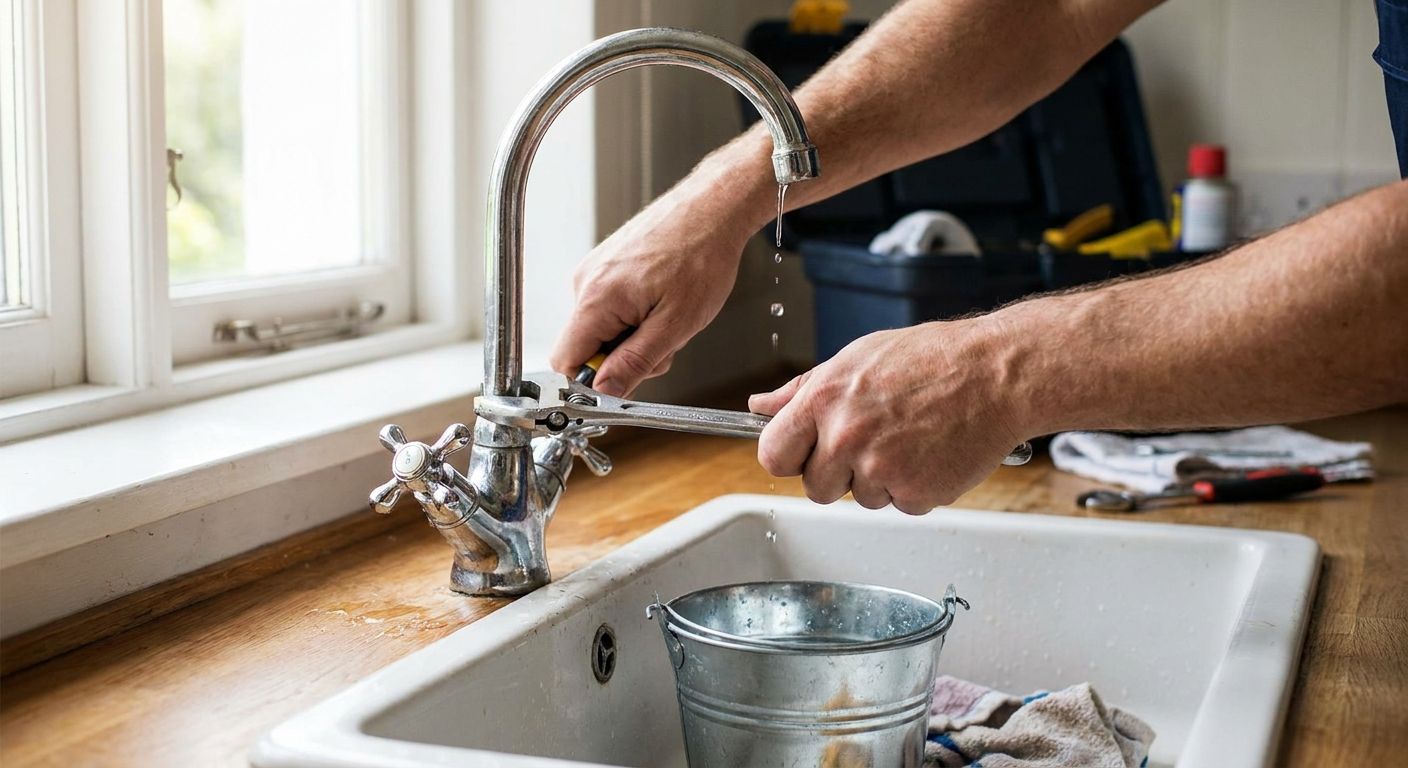
- Adjustable spanner or shifter
- A cloth or old towel
- A bucket or bowl
- Plumber's tape (PTFE tape) if you have it
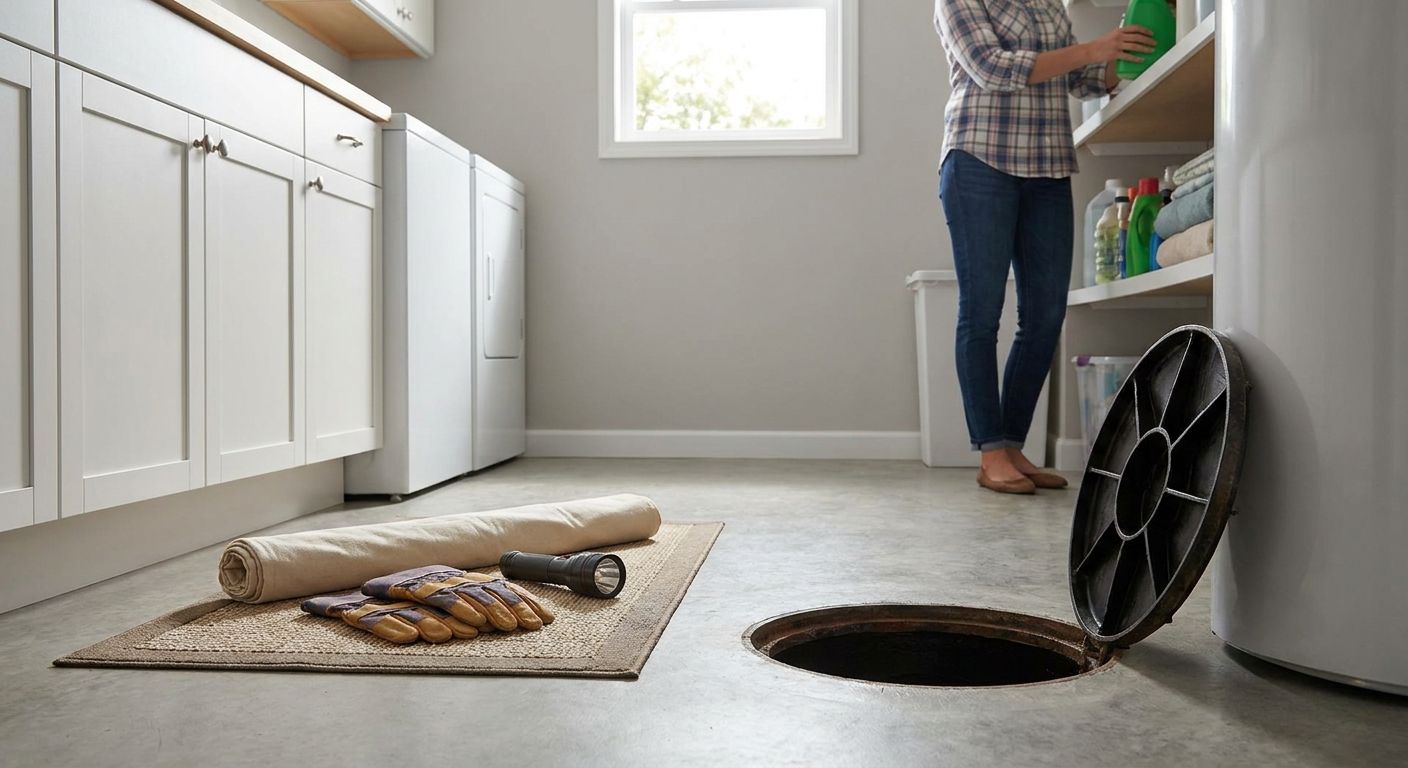
- A torch, if the isolation valve sits deep in the cabinet
- Phone number for a 24/7 emergency plumber, saved before you start
The steps
1. Find the isolation valve under the sink
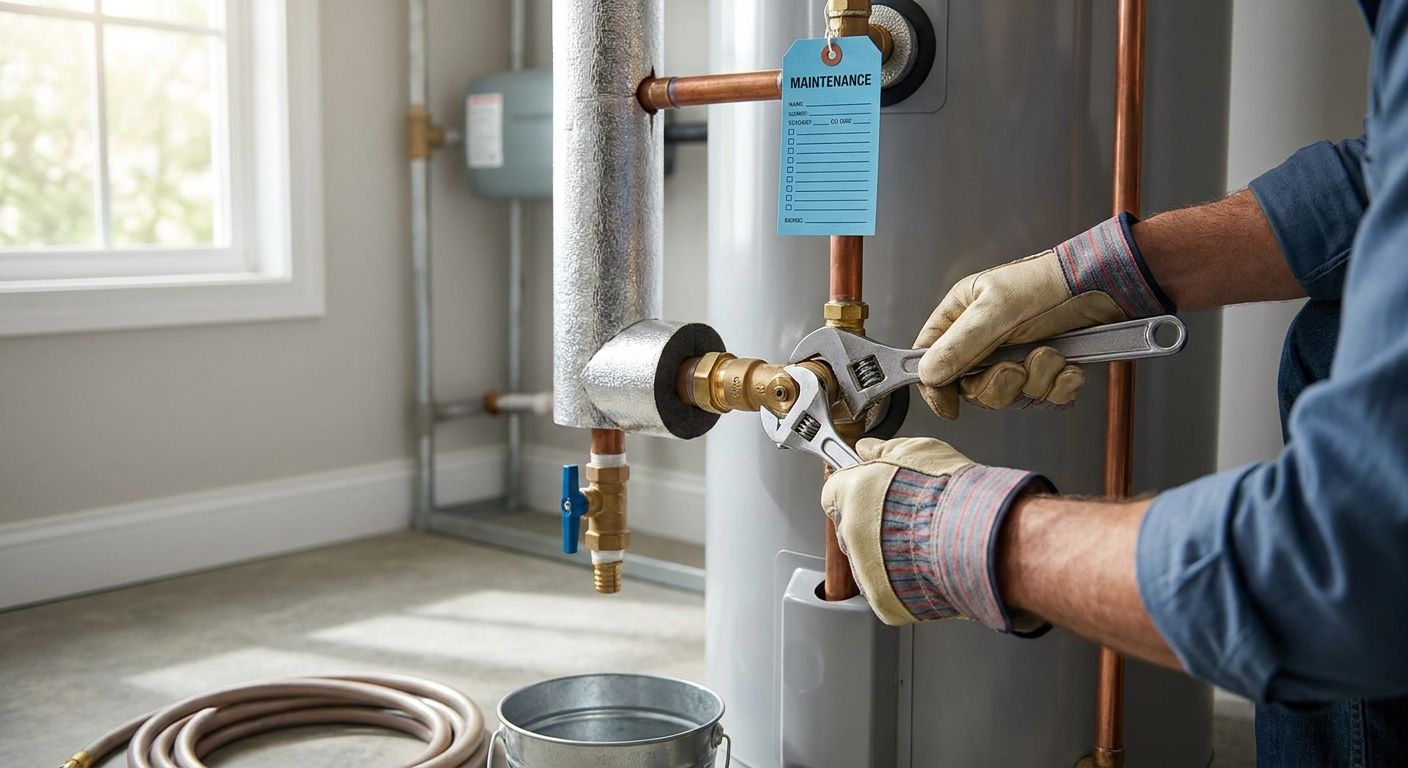
Most Melbourne homes built after the mid-1990s have a small quarter-turn valve on the pipe feeding each tap, usually behind the U-bend. This is the fastest way to kill the leak without touching the mains. Turn it clockwise a quarter turn until it stops — you'll feel resistance and hear the drip slow within seconds. Expected outcome: the drip stops or drops to a trickle within a minute. Common mistake: people confuse the isolation valve with the trap nut and loosen the wrong fitting, which turns a drip into a spray.
2. Shut the mains if there's no isolation valve
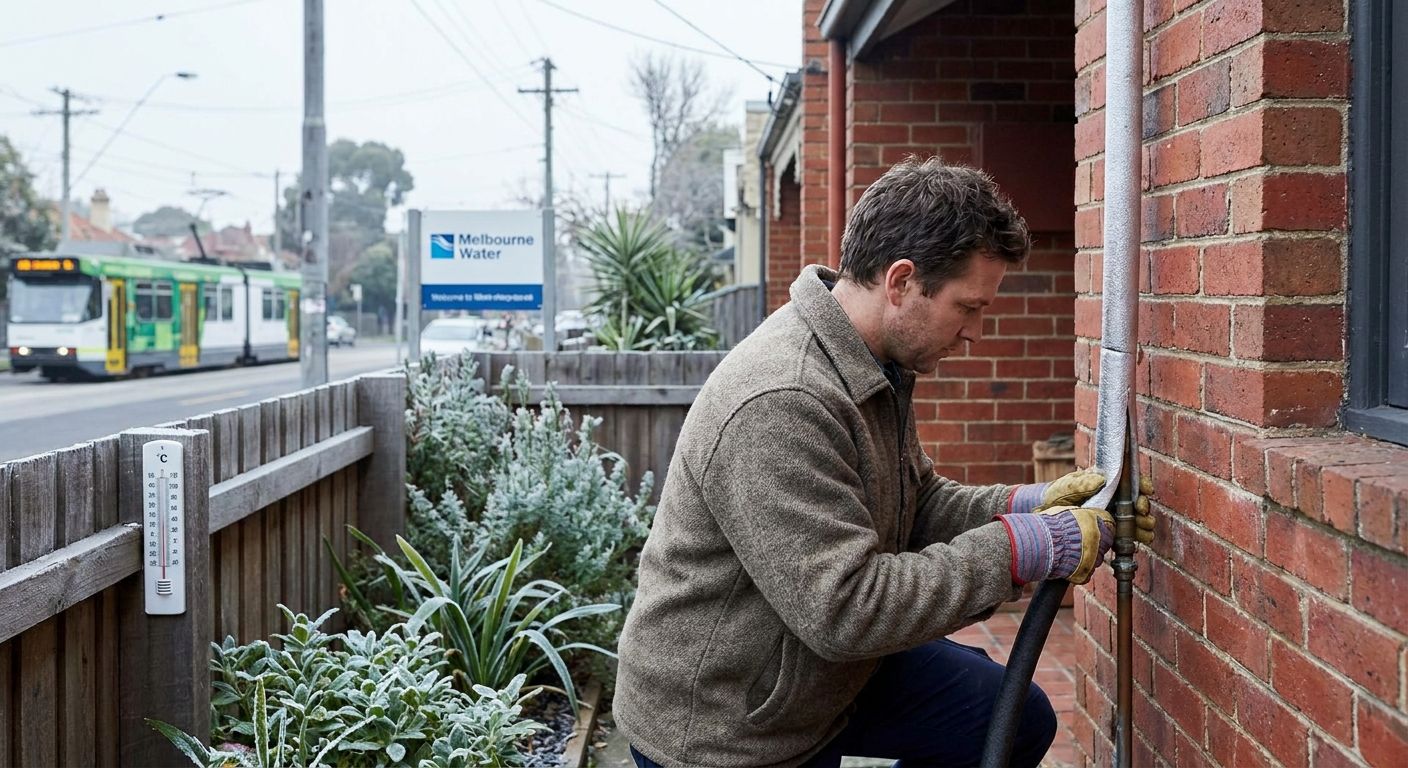
Older properties, particularly in inner-Melbourne suburbs like Fitzroy or Brunswick, sometimes skip individual isolation valves entirely. Locate the mains stopcock, usually near the water meter at the front boundary or under the house near the kitchen. Turn it clockwise until firm. This cuts water to the whole property, so warn anyone else home before you do it. Expected outcome: all taps in the house stop flowing, confirming the leak source is upstream of the tap itself, not a separate issue.
3. Open the tap to drain the line
With the water off, open the leaking tap fully to release pressure and drain the remaining water in the pipe. This stops a residual dribble from continuing to pool under the sink. Let it run until it's just air spitting through, usually 20 to 30 seconds. Common mistake: skipping this step and assuming the leak is fully stopped, only to find water still seeping from the spout for another hour.
4. Protect the cabinet and mop up standing water
Lay a towel or bucket under the pipework to catch drips while pressure equalises, and check the cabinet base for pooled water. Chipboard cabinet bases swell and delaminate within 24 to 48 hours of sitting in water, so drying this now saves a repair bill later. Wipe down any metal fittings too — standing water accelerates corrosion on brass and chrome joints. Expected outcome: dry cabinet floor, no lingering damp smell by the next day.
5. Wrap the tap if the isolation valve isn't accessible
If you genuinely can't reach a shutoff and the drip is from the spout itself, wrap the tap body tightly in a cloth secured with a hose clamp or several wraps of tape. This slows the drip to a manageable trickle into a bowl, not a fix. Check it every hour — a wrap can shift as the cloth saturates. This is strictly a stopgap measure, not something to leave running for days.
6. Note the leak location and tap type
Before the plumber arrives, note whether the leak is from the spout, the base of the tap, or the handle itself — each points to a different fault (washer, O-ring, or spindle seal). Photograph the tap brand and model if visible on the handle or body. This cuts diagnosis time on-site and often means the plumber arrives with the right washer or cartridge already in the van.
7. Call a licensed plumber if the drip continues
If the tap still drips after the mains or isolation valve is shut, or if you can hear water running inside a wall, stop trying to isolate it yourself and call a licensed plumber immediately. A leak that continues after both valves are closed usually means a fault further back in the pipework, not the tap itself. Apex Drain Plumbing runs 24/7 emergency callouts across Melbourne for exactly this kind of fault in 2026, including tap, toilet and burst pipe repairs.
Tap still leaking after you shut the valve?
Licensed 24/7 plumber for tap, drain and hot water repairs across Melbourne.
Troubleshooting
- Tap still drips after the isolation valve is closed. The valve itself may be worn or only partially closed — check it's turned fully clockwise, and if it still leaks past, the fault is upstream in the wall.
- Water hammer or banging when you shut the tap. This points to loose pipe brackets or a failing washer, both worth flagging to the plumber on the same visit.
- Spindle won't turn at all. Don't force it — a seized ceramic disc cartridge cracks under pressure and turns a $150 repair into a full tap replacement.
- Leak is from the base of the tap, not the spout. This is usually a perished O-ring, not a washer, and needs the tap body partly disassembled — leave it to the plumber rather than guessing.
- Mains stopcock won't budge. Corroded stopcocks are common in Melbourne homes over 20 years old — don't force it with a wrench, as a snapped valve creates an uncontrolled leak that's far worse.
- Water pools again a few hours after you thought it stopped. Check for condensation versus an actual leak first, then recheck the isolation valve — it may have crept open slightly from vibration.
Tools and resources
- Adjustable spanner, torch, bucket, cloth, PTFE tape — the full kit above
- A 24/7 emergency plumber for anything beyond a temporary stopgap
- A guide on clearing a blocked drain before it floods your home if the leak has backed up into a slow-draining sink
What to do next
A stopped drip is a delay, not a repair. Book a licensed plumber within the week even if the leak looks fully contained — washers and cartridges only get worse, never better, and a $30 part replaced now beats a burst fitting at 2am in 2026.
“A stopped drip is a delay, not a repair — the washer only gets worse from here.”
FAQ
How do you stop a leaking tap fast without calling a plumber?
Shut the isolation valve under the sink, or the mains stopcock if there isn't one, then open the tap briefly to drain the line. This stops most drips within two minutes but doesn't fix the underlying washer or cartridge fault.
Is it safe to leave a leaking tap overnight?
It's safe if you've isolated the water supply, but a wrapped or unisolated leak left overnight risks cabinet water damage. Shut the valve fully before you go to bed if the tap is still dripping.
What causes most tap leaks in Melbourne homes?
A worn rubber washer or O-ring inside the tap body causes most drips, especially in homes with original 1980s and 1990s compression taps. Corroded spindles and cracked ceramic disc cartridges are the other common culprits.
How much does it cost to fix a leaking tap in 2026?
A straightforward washer or cartridge replacement is one of the cheaper plumbing callouts, though pricing varies by tap brand and access. Ask for upfront pricing before the plumber starts work.
Can a leaking tap cause water damage?
Yes, standing water under a sink can swell and delaminate a chipboard cabinet base within 24 to 48 hours. It also accelerates corrosion on brass and chrome fittings nearby.
Should I turn off the mains or just the isolation valve?
Use the isolation valve under the sink if one exists, since it only cuts water to that fixture. Only shut the mains stopcock if there's no isolation valve or if water is leaking somewhere you can't isolate.
Why does my tap still drip after I turned off the water?
Residual water sitting in the pipe takes 20 to 30 seconds to drain out once you open the tap. If it keeps dripping after that, the isolation valve itself may be worn or not fully closed.
Do I need a licensed plumber for a dripping tap?
You can stop the immediate leak yourself, but replacing a washer, O-ring or cartridge properly needs a licensed plumber to avoid stripping the tap body. A 24/7 emergency plumber can also check for upstream faults if the drip won't stop.
One last thing
Most people reach for the spanner on the tap handle first — the isolation valve under the sink is almost always the faster fix, and it's the one step homeowners skip because they've never looked for it. Find it once, in daylight, before you ever need it at midnight.