A blocked toilet at 9pm on a Sunday doesn't wait for the hardware store to open. If the plunger's missing or busted, hot water, dish soap and a few household tools will usually clear a soft clog inside 15 minutes.
- Hot water plus dish soap clears most soft toilet clogs in 2026 without a plunger.
- A wire coat hanger or toilet brush handle works as a manual clearing tool in a pinch.
- If water rises instead of draining after two attempts, stop and call a licensed plumber.
- Never mix chemical drain cleaners with a still-full bowl — it traps fumes and can crack the porcelain.
Why this matters
Most toilet blockages in Melbourne homes are soft clogs — too much paper, a wipe that shouldn't have gone down, or a toy from a curious toddler. These respond to heat and soap because both break down the mass and reduce friction against the pipe wall. A plunger just adds mechanical force to the same idea; it isn't the only way to generate it.
The risk with skipping proper technique is overflow. Toilets hold roughly 2 to 4 litres in the bowl, and pouring water in too fast on top of a blockage pushes it over the rim onto your floor. Every method below is built to avoid that.
What you'll need
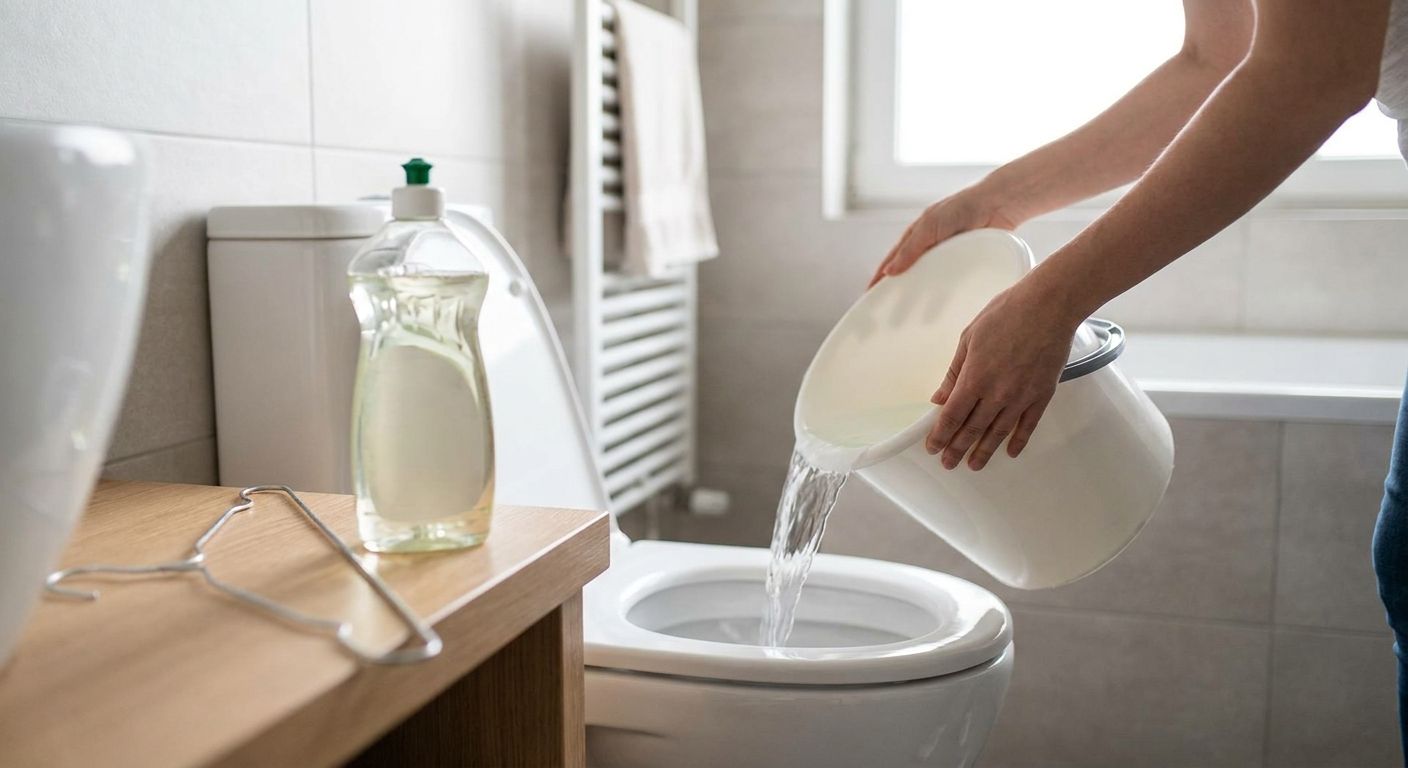
- A bucket of hot (not boiling) water — around 60°C, hot enough to soften waste but not hot enough to crack porcelain
- Dish soap or shampoo (roughly half a cup)
- A wire coat hanger, bent straight with a small hook on one end, or a toilet brush
- Rubber gloves
- An old towel to protect the floor
- Optional: a wet/dry shop vacuum if the bowl is already close to overflowing
If none of this shifts the blockage, that's your signal the clog sits further down the line, and it's worth reading how to clear a blocked drain fast before it floods your home before you escalate to more aggressive DIY methods.
The steps
1. Check the water level first
Before you add anything, look at how full the bowl is. If it's near the rim, don't flush again — a second flush on top of a full bowl is the single most common cause of an overflow. If the level is dangerously high, bail water out with a cup into a bucket until it sits at roughly the normal fill line.
Common mistake: flushing twice hoping the second attempt "pushes it through." It doesn't — it just adds more water to an already blocked system.
2. Add dish soap and let it sit
Squeeze half a cup of dish soap directly into the bowl and let it sit for 10 to 15 minutes. Soap acts as a lubricant, coating the inside of the trap so the blockage slides rather than jams. This step alone clears a surprising number of paper-based clogs without any further action.
Common mistake: pouring soap in and immediately trying to flush. Give it the full 10 minutes to actually work into the clog.
3. Pour hot water from waist height
Heat water on the stove or in a kettle until it's hot to touch but not boiling, then pour it into the bowl from about waist height. The height adds a bit of force and helps the water push through the trap rather than just sitting on top of the clog. Pour slowly enough that the water doesn't splash back at you.
Common mistake: using boiling water straight off the stove. Ceramic can crack under sudden temperature shock, and a cracked bowl is a far more expensive problem than a blocked one.
4. Wait and watch the water level
Give it 5 to 10 minutes after the hot water goes in. If the level visibly drops, the clog is breaking up and you're close. If nothing changes, move to the manual tool step rather than repeating hot water pours — repetition without movement usually means the trap needs physical agitation.
5. Use a bent wire coat hanger or brush handle
Straighten a wire coat hanger and bend a small hook at one end, wrap the hook in an old rag to protect the porcelain, then feed it gently into the trap and work it in a twisting motion. A toilet brush handle works the same way for softer clogs — push and twist rather than jab. This physically breaks up what soap and heat have already softened.
Common mistake: forcing the wire in hard. Toilet traps have curves, not straight drops, so force without direction just scratches the bowl or gets the wire stuck.
6. Flush on a low volume test
Once you feel resistance ease off, do a small test flush rather than a full one — hold the handle briefly to release less water than a normal flush. If it drains normally, you're clear. If it's still slow, repeat steps 2 through 5 once more before deciding this needs a professional look.
Common mistake: doing a full flush straight away. A partial test flush tells you whether the clog is actually gone without risking a fresh overflow if it isn't.
Toilet still blocked after DIY?
Apex Drain Plumbing runs 24/7 across Melbourne for blocked toilets and drains.
Troubleshooting
Water rises instead of draining after hot water and soap — stop adding water immediately. This usually means the blockage sits beyond the trap, in the branch line, and a home fix won't reach it. This is where a licensed plumber with proper drain equipment takes over.
The bowl gurgles but doesn't drain — a gurgle without drainage usually points to a venting issue further down the drain system, not just the toilet itself. It's a sign air is trapped, which is a different problem than a simple paper clog.
Water drains slowly but never fully clears — this pattern, especially if it repeats every few weeks in 2026, suggests a partial blockage building up rather than a one-off event. Recurring slow drains are the early warning sign for a full blocked drain, and catching it early is cheaper than an emergency callout later.
Smell of sewage after clearing the clog — this points to a dried-out trap or a vent problem, not the clog itself. If the smell persists after the water is flowing normally again, get it checked rather than masking it with air freshener.
Multiple fixtures backing up at once (toilet, shower, sink) — this is not a toilet clog. It means the main drain line is blocked and every fixture connected to it is affected. Stop using all water in the house and call an emergency plumber immediately.
Tools and resources
- Bucket, gloves, old towel — basic protection for any DIY attempt
- Dish soap or shampoo — the cheapest and most effective softening agent
- Wire coat hanger or toilet brush — manual agitation tool
- Wet/dry shop vacuum — useful if the bowl is already near overflow and you need to remove water safely
- A licensed plumber — for anything beyond a soft, single-fixture clog
What to do next
If the steps above didn't clear it, or the same toilet keeps blocking every few weeks, the problem is likely further down the pipe than a bowl-level fix can reach. Read how to clear a blocked drain fast before it floods your home for the next level of DIY diagnosis, and know when it's time to stop troubleshooting and get a professional out.
FAQ
How do I unblock a toilet without a plunger?
Pour half a cup of dish soap into the bowl, let it sit 10 minutes, then add hot (not boiling) water from waist height. A bent wire coat hanger or toilet brush handle clears what the soap and heat soften.
Can hot water alone unblock a toilet?
Hot water alone clears mild clogs by softening paper and waste, but pairing it with dish soap as a lubricant works faster and more reliably for most household blockages in 2026.
Is it safe to use boiling water on a blocked toilet?
No. Boiling water can crack ceramic porcelain from thermal shock. Use water that's hot to the touch, roughly 60°C, not water straight off a rolling boil.
What household items work like a plunger?
A wire coat hanger bent into a hook, a toilet brush handle, or a wet/dry shop vacuum can each substitute for a plunger's mechanical action on a soft clog.
Why does my toilet keep blocking every few weeks?
Recurring blockages usually mean a partial obstruction further down the drain line rather than a one-off clog. This pattern is worth a professional drain inspection before it becomes a full blockage.
When should I call an emergency plumber instead of DIY methods?
Call immediately if water rises after two attempts, if multiple fixtures back up at once, or if you smell sewage after the water starts draining again. These signs point to a blockage beyond what home methods can reach.
Does dish soap actually help unblock a toilet?
Yes. Dish soap acts as a lubricant that coats the inside of the trap, letting the clog slide through rather than staying jammed against the porcelain.
Can a plastic bottle work instead of a plunger?
A cut plastic bottle pushed and pulled in the bowl can mimic a plunger's suction in a pinch, though it's less effective than dish soap and hot water for most household clogs.
One last thing
The order of operations matters more than the tools. Soap before heat, heat before force, and a small test flush before a full one — skip the order and you're more likely to end up bailing water off the bathroom floor than clearing the clog. If you've cycled through all of it twice and the bowl still won't drain, that's not a stubborn clog anymore, it's a job for a licensed plumber with equipment made for the branch line, not the bowl.