A slab leak moves water under your concrete foundation long before it shows up on the surface, and by the time you spot a warm patch on the tiles or a crack in the grout, the leak has usually been running for weeks. This guide walks through the signs of a slab leak, what to check first, and when to stop guessing and call a licensed plumber.
- Signs of a slab leak include warm floor patches, a spinning water meter, and mould smell with no visible source.
- Apex Drain Plumbing's verdict: any water bill jump over 20% with no new usage warrants a leak detection call.
- Cracked tiles or hairline splits in a slab that wasn't moving before point to water pressure building underneath.
- Skip drilling into concrete yourself; professional leak detection finds the exact point before you touch flooring.
Why this matters
Melbourne's mix of older homes with ageing copper pipework and newer slab-on-ground builds means slab leaks show up across every suburb, not just older housing stock. A slab leak left unchecked doesn't just waste water; it undermines the concrete itself, and by 2026 standards a delayed repair on a hot water line running under a slab can mean re-piping through the floor instead of a straightforward fix. Catching the signs of a slab leak early is the difference between a same-day repair and a flooring replacement.
Water under a slab has nowhere to go but up through cracks, sideways along the vapour barrier, or straight into your water bill. None of those outcomes are cheap to ignore.
What you'll need
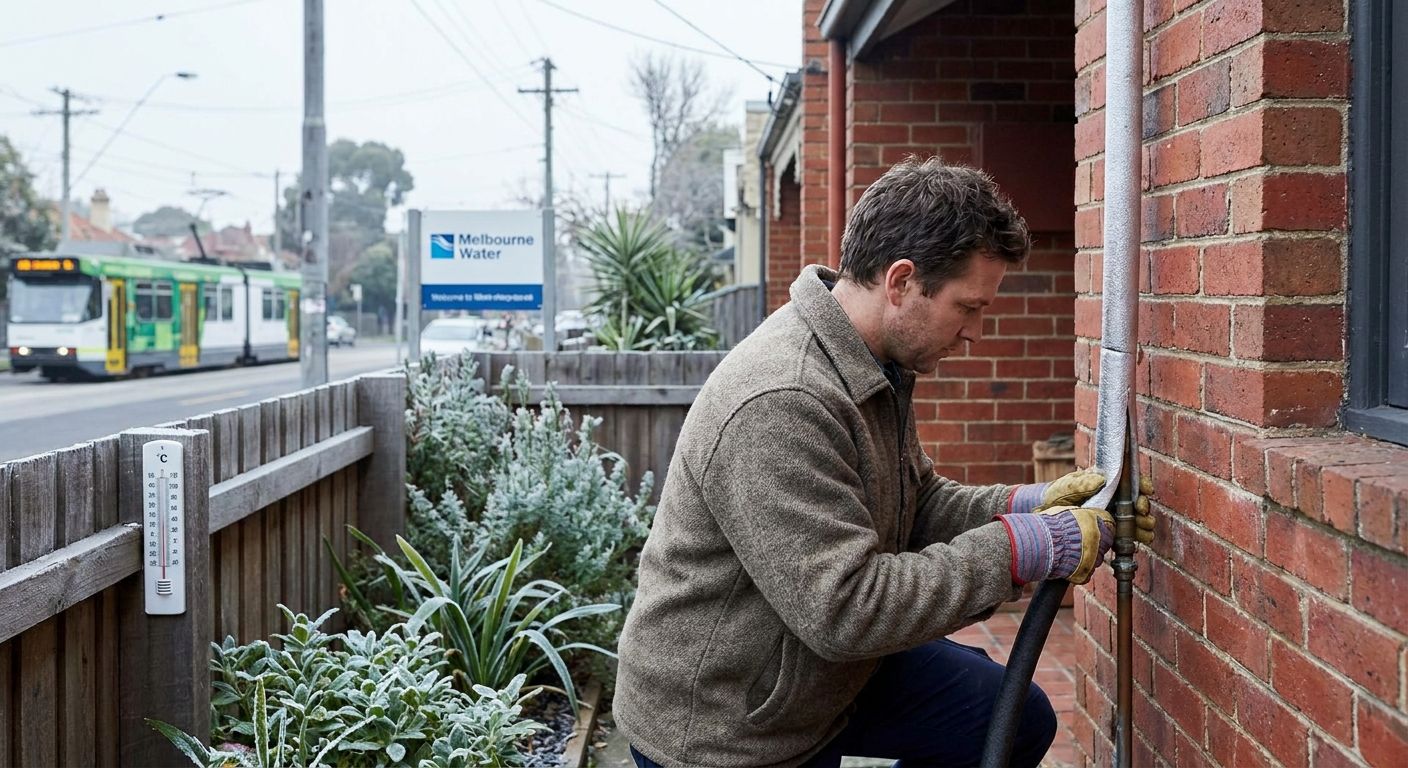
- 10 minutes and access to your water meter (usually near the front boundary or under a small lid in the nature strip)
- Your last two to three water bills for comparison
- A torch to check under vanities, along skirting boards, and near the hot water unit
- Bare feet or socks, since you're checking for warm spots and shoes hide the temperature difference
- Apex Drain Plumbing saved in your phone for when detection needs proper equipment, not guesswork
The steps
1. Check the water meter for phantom movement
Turn off every tap, dishwasher, washing machine, and irrigation zone in the house. Note the exact reading on the meter, wait 15 minutes without touching anything, then check it again. If the dial has moved or the digital reading has climbed with zero water use, you have a leak somewhere in the system, and a slab leak is one of the most common causes when nothing above ground explains it. Expected outcome: a stationary reading means no active leak at that moment; movement means book leak detection. Common mistake: forgetting the fridge ice maker or a slow-filling cistern, both of which can mimic a leak.
2. Feel for warm or damp patches on flooring
Walk the house in bare feet, focusing on tiled areas, concrete slab sections, and carpet directly over the slab. A warm patch that isn't explained by underfloor heating or a nearby hot water pipe run is a strong signal of a slab leak on the hot water line. Damp patches on carpet with no obvious source, no spilled drink and no pet accident, point the same direction. Common mistake: dismissing a warm patch because the hot water tank is nearby without checking if the tank is actually that close.
3. Watch for cracks that weren't there before
Photograph any new hairline cracks in tiles, grout lines, or the slab itself, and date the photo. Water pressure building under a slab pushes the concrete up in small, uneven ways that show as fresh cracking rather than the wide, tapering cracks of normal settling. Recheck the same spots after two weeks; a crack that's widened is a sign of ongoing movement, not a one-off. Common mistake: assuming all foundation cracks are cosmetic, when width and progression matter more than the crack itself.
4. Compare your last three water bills
Line up your last three statements and look at litres used, not just the dollar figure. A jump of 20% or more in usage with no new appliance, no extra household member, and no garden watering change is one of the clearest signs of a slab leak. Melbourne water retailers flag unusual spikes on request, so call and ask if your account shows an alert. Common mistake: blaming a bill spike on rate increases instead of checking the actual litres.
5. Listen for running water with everything off
Stand near the laundry, bathroom, and kitchen with all fixtures off and the house otherwise quiet; early morning works best. A faint hissing or trickling sound coming from the floor or a wall near the slab, rather than from a visible pipe, is a strong sign of pressurised water escaping underground. Common mistake: mistaking normal hot water system cycling noise for a leak.
6. Smell for mould or damp without a visible source
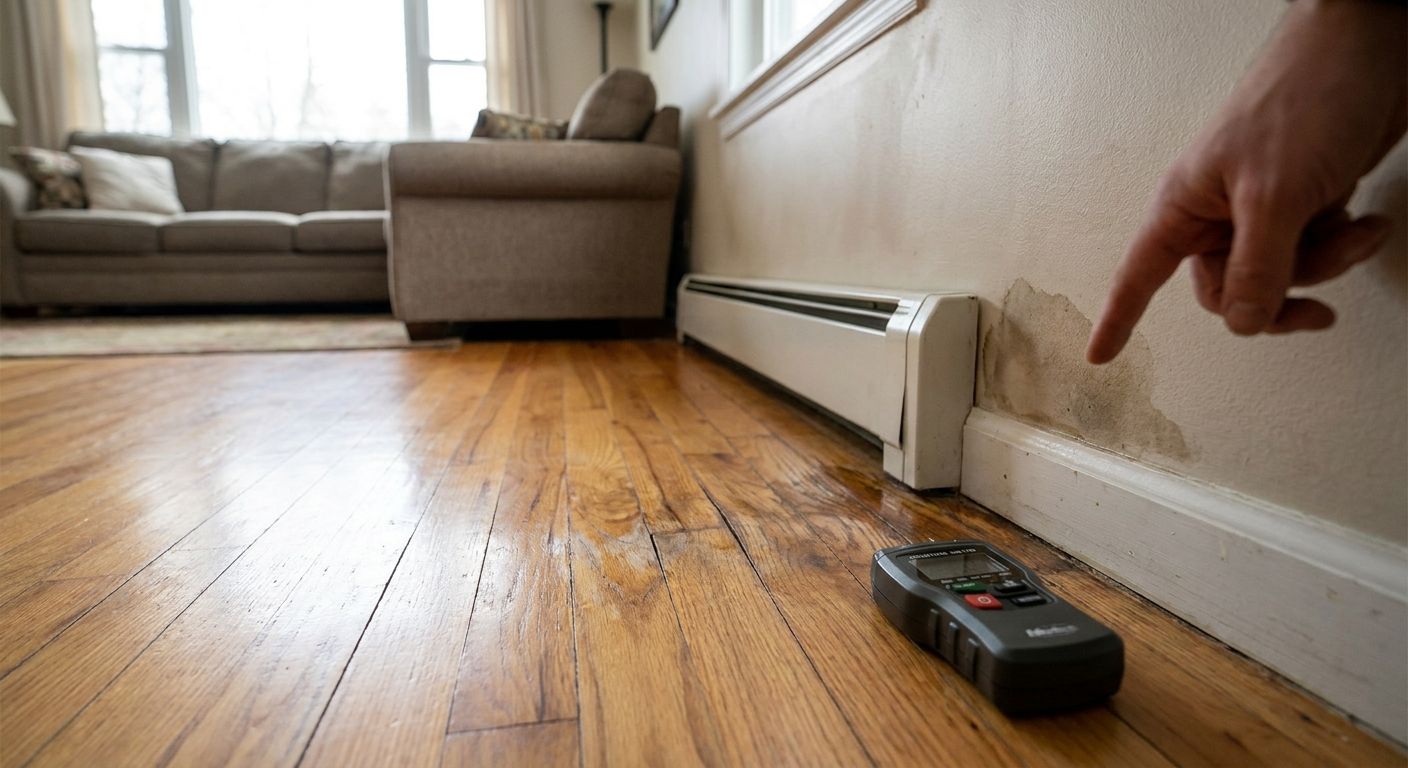
Check skirting boards, the base of built-in wardrobes, and any room without windows for a musty smell that doesn't clear after airing the house out. A slab leak feeds mould from underneath, so the smell often shows up before any visible staining. Common mistake: treating it as a one-off humidity issue and running a dehumidifier instead of investigating the source.
7. Check for low water pressure in one fixture only
Run every tap in the house one at a time and compare pressure. If one fixture, often a shower or a single tap, has noticeably weaker pressure than the rest while everything else is normal, water may be escaping through a slab leak upstream of that fixture rather than reaching it. Common mistake: assuming low pressure everywhere means a slab leak, when it's more likely a mains-side issue or a shared problem across the whole street.
“If the water meter dial spins with every tap in the house switched off, that's not a mystery, that's a leak.”
Book leak detection before it spreads
Licensed, insured plumbers across Melbourne, upfront pricing, 24/7.
Troubleshooting
- Meter moves but you can't find a leak indoors. The leak is likely outdoors or under the slab. Book professional leak detection rather than digging up the garden on a guess.
- Warm patch near the hot water unit. Rule out normal heat transfer from the unit itself before assuming a slab leak; check a patch at least two metres away from any hot water appliance.
- New cracks in an older home. Older homes settle naturally, but track crack width over two weeks. Static width usually means settling; widening means active pressure underneath.
- Bill spike with irrigation running. Check the irrigation controller and any stuck valves before booking a slab leak inspection, since a stuck zone valve produces the same bill jump.
- Mould smell in one room only. Check under the vanity, behind the toilet, and around the shower base first. A slab leak usually affects a wider area, not one isolated cupboard.
- Low pressure in one shower only. Check the showerhead and flexible hose for blockage before assuming a slab leak; a clogged aerator produces identical symptoms.
Tools and resources
- Water meter location and reading log (most Melbourne properties have this near the front boundary)
- Last three water bills, compared by litres used, not dollar cost
- A torch and a notepad for tracking crack photos and dates
- If a blocked drain is adding water pressure to an already stressed slab, clearing it fast stops a second problem compounding the first
What to do next
If two or more of the signs above show up together, a moving meter plus a warm patch, or a bill spike plus a musty smell, stop testing and book leak detection. Professional equipment finds the exact point of a slab leak without guessing where to cut into concrete, which saves both time and flooring. If standing water or slow drains are part of what you're seeing, a blocked drain backing up against a slab leak makes both worse, so deal with the drain at the same time.
FAQ
What are the first signs of a slab leak?
The first signs of a slab leak are usually a warm patch on the floor, an unexplained rise in your water bill, and a water meter that keeps moving with every tap off. Cracks in tiles or grout tend to show up later, once pressure has been building for a while.
How much does a slab leak raise your water bill?
A slab leak can raise usage by 20% or more compared to your last two or three bills, depending on the size of the leak and how long it's been running. Comparing litres used, not just the dollar total, gives a clearer read than the bill amount alone.
Can a slab leak fix itself?
No, a slab leak does not fix itself and gets worse the longer it runs under pressure. Left alone through 2026, ongoing water flow can undermine the concrete and turn a pipe repair into a flooring replacement.
Is a slab leak an emergency?
A slab leak is an emergency once you see active flooring damage, a spiking water bill, or standing water, and it should be treated as urgent even before visible damage appears. Booking a 24/7 emergency plumber for detection stops the leak from spreading further under the foundation.
How do plumbers detect a slab leak without breaking the floor?
Plumbers use acoustic listening equipment and thermal imaging to pinpoint a slab leak's exact location before any concrete is cut. This narrows the repair to a small, targeted section instead of an exploratory dig across the whole slab.
What causes a slab leak in Melbourne homes?
Slab leaks in Melbourne homes are usually caused by ageing copper pipework corroding under the concrete, ground movement from clay soil, or high water pressure stressing a weak joint. Homes built before modern PEX piping became standard carry a higher risk.
Does home insurance cover slab leak repairs?
Coverage varies by policy and insurer, so check your specific policy documents or call your insurer directly before assuming a slab leak is covered. Many policies cover the resulting damage but not the pipe repair itself.
How long can a slab leak run before it's a problem?
A slab leak can run for weeks before symptoms are obvious, but even a small leak wastes hundreds of litres over that time and starts undermining the slab from day one. Acting on early signs of a slab leak, rather than waiting for visible cracking, avoids the bigger repair.
One last thing
Most homeowners check for a slab leak by looking for water, but the fastest confirmation is almost always the water meter test, done twice, 15 minutes apart, with every fixture off. It takes less time than reading this article and rules out or confirms a leak before you touch a single tile.
If your test comes back positive, or two of the other signs line up, Apex Drain Plumbing runs licensed leak detection across Melbourne with upfront pricing, 24/7, the same emergency plumber you'd call for a burst pipe handles slab leak detection with the same equipment and the same urgency.