Old pipes fail quietly under pressure they were never built to handle, and dialling back that pressure is the cheapest insurance you can buy for a house running galvanized or ageing copper plumbing in 2026.
- Static pressure above 500 kPa breaches AS/NZS 3500.1 and stresses ageing pipes fast.
- A pressure reducing valve set to 350-400 kPa protects old galvanized and copper lines without killing flow.
- Test pressure with a gauge on an outside tap before touching any valve.
- Banging pipes or dripping taps after adjustment means the PRV is faulty, not the setting - call a licensed plumber.
Why this matters
Melbourne suburbs full of weatherboard and brick veneer homes built before the 1980s are still running original galvanized steel or early copper pipework, and that metal has been corroding from the inside for 40-plus years. High mains pressure pushes water hard against thinning pipe walls and worn joints, and it's usually the reason a pinhole leak turns into a burst pipe overnight. Apex Drain Plumbing sees this pattern constantly across older Melbourne streets: a household never touches its water pressure, then a 60-year-old elbow joint gives out during a heatwave.
AS/NZS 3500.1 sets 500 kPa as the maximum static pressure allowed at a property's point of connection in Australia. That's the legal ceiling, not the safe target for ageing pipework. Plumbers routinely bring older homes down to 350-400 kPa specifically to protect fittings that were rated for lower pressure decades ago and have never been upgraded.
What you'll need
- A water pressure gauge that threads onto an outdoor tap ($20-$40 from a hardware store)
- An adjustable wrench and a flathead or Allen key, depending on your PRV type
- Access to the pressure reducing valve, usually mounted near the water meter or where the main enters the house
- 15-20 minutes and the main water supply within reach in case you need to shut it off
- A notepad to record before-and-after readings at more than one tap
The steps
1. Test your current static pressure
Screw the gauge onto an outside tap, turn it on fully, and read the number in kPa with every other tap in the house closed. This tells you whether you're actually dealing with a pressure problem or something else, like a partially closed valve. Anything reading above 500 kPa on an older property is a red flag; anything above 600 kPa is actively shortening the life of every joint in the house.
2. Locate the pressure reducing valve
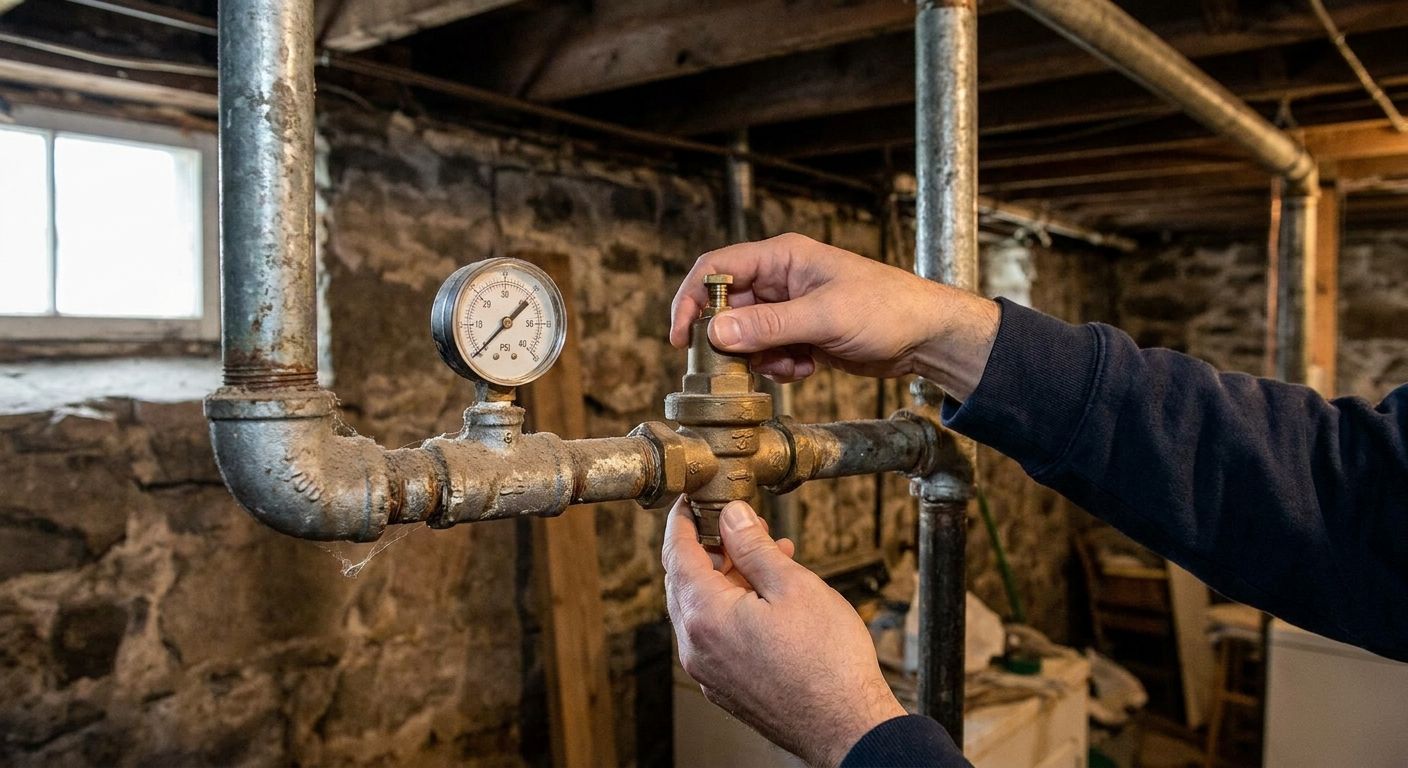
Most Melbourne homes have a PRV fitted close to the water meter, often a brass, bell-shaped fitting with an adjustment screw or bolt on top. If your property has no PRV at all and the static reading is high, that's the actual fix needed here, not a DIY adjustment on a valve that doesn't exist.
3. Shut off the main supply before adjusting
Turn the main isolation valve off, then release pressure by opening a tap until water stops flowing. Working on a pressurised line is how the adjustment screw strips or the valve body cracks, and that turns a 20-minute job into an emergency callout.
4. Adjust the valve in small increments
Loosen the locking nut, then turn the adjustment screw a quarter-turn at a time - clockwise typically increases pressure, counter-clockwise reduces it, but check the make first since this varies. Re-pressurise the system between adjustments and re-test rather than cranking it in one go; overshooting low leaves you with weak flow at showers and outdoor taps.
5. Retest at the gauge and at an indoor tap
Aim for a static reading in the 350-400 kPa band for pipework older than 30 years. Check a second tap, ideally the furthest one from the meter, since pressure drop across old, narrowed galvanized pipe can make readings inconsistent between fixtures.
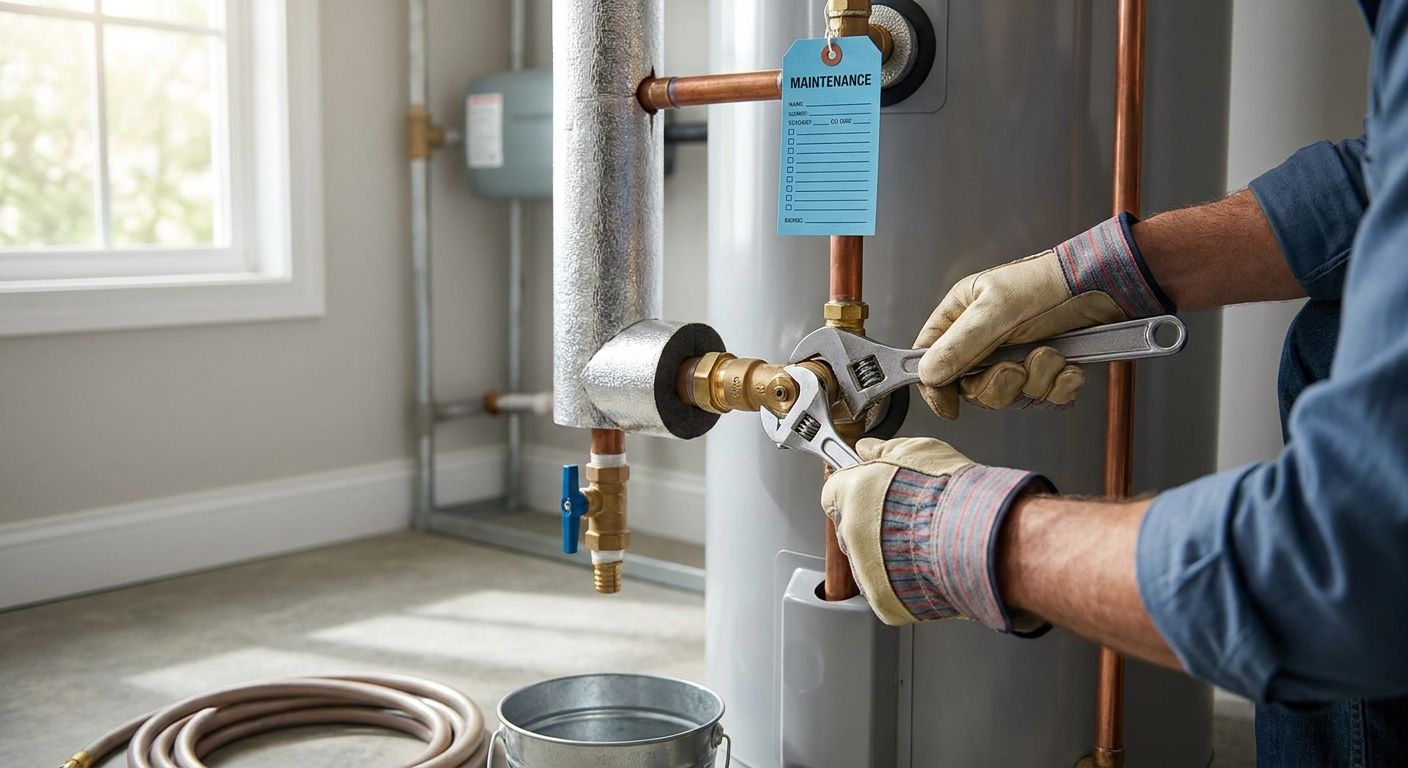
6. Check the hot water system's relief valve
A lower mains pressure doesn't remove the need for a working temperature and pressure relief valve on the hot water unit - it's a separate safety device. If you're not confident reading or resetting it, treat that as a job for a licensed plumber rather than guesswork.
7. Listen for water hammer once the system is back up
Run a tap and shut it off sharply. A loud bang in the walls signals trapped air or a failing arrestor, and it puts repeated shock pressure on old joints even after you've lowered the baseline. A plumber can fit or replace a water hammer arrestor in under an hour in most cases.
Not confident adjusting the valve yourself?
Apex Drain Plumbing handles PRV checks and pressure adjustments across Melbourne, 24/7.
Troubleshooting
- Pressure still reads above 500 kPa after adjustment - the PRV itself is likely worn out internally, not just out of adjustment. Valves older than 10-15 years often need replacing rather than tuning.
- Flow feels weak at showers after the change - you've probably gone below 300 kPa. Wind the adjustment screw back a quarter-turn and retest.
- Banging or knocking continues after fitting an arrestor - trapped air in the line is a common culprit. Bleed each tap slowly one at a time before assuming the arrestor has failed.
- A tap starts dripping right after the adjustment - this usually means a worn washer that the previous higher pressure was masking, not a fault caused by the change itself. If you're already dealing with one, check how to stop a leaking tap before the plumber arrives.
- You notice a damp patch or unexplained water bill spike - this points to a leak that predates any pressure work, often underground. That's a job for leak detection, not a valve adjustment; see how to tell if you have a slab leak.
- The PRV is seized or won't move at all - stop. Forcing a corroded adjustment screw on a decades-old valve is how you crack the housing and flood the meter box.
Tools and resources
- Pressure gauge (threaded, kPa scale)
- Adjustable wrench, sized to the PRV's locking nut
- A working main isolation valve - if yours is stuck or leaking, that's worth fixing before you touch the PRV
- A record of static pressure readings taken over 2026 so you can track drift over time
- A licensed plumber's number on hand for anything beyond a straightforward valve turn
What to do next
Once pressure is sitting in the safe band, the next weak point in an older Melbourne home is usually the taps and fittings that have been running under high pressure for years. Check how to stop a leaking tap before the plumber arrives if you noticed any drips during testing, and get a professional pressure check scheduled at least once a year if your pipework is original to the build.
FAQ
What water pressure is safe for old pipes?
350-400 kPa is the safe working range for pipework older than 30 years, well under the 500 kPa legal maximum set by AS/NZS 3500.1. Pushing higher than that speeds up wear at every joint and fitting.
How do I reduce water pressure without a plumber?
Adjust the pressure reducing valve near your water meter in small increments after shutting off the main supply, then retest with a gauge. If there's no PRV fitted at all, that install job needs a licensed plumber.
Is high water pressure bad for old galvanized pipes?
Yes - galvanized steel corrodes from the inside over decades, and high pressure stresses thinned pipe walls at the exact spots most likely to fail. It's one of the most common causes of sudden burst pipes in homes built before the 1980s.
How much does a pressure reducing valve cost to replace in 2026?
Costs vary by property and valve size, so get a fixed quote from a licensed plumber rather than relying on a generic figure. Ask for the price before work starts, since reputable operators give upfront pricing for this job.
What's the normal water pressure for a house?
Most Australian homes run between 350 and 500 kPa at the mains, with 500 kPa the legal ceiling under AS/NZS 3500.1. Older homes are usually better protected at the lower end of that range.
Can too much water pressure cause a burst pipe?
Yes - sustained pressure above the safe range accelerates wear at joints, elbows and any corroded section of pipe, and it's a leading contributor to burst pipes in ageing plumbing. Lowering it doesn't fix existing damage but it slows further deterioration.
How do I know if my house has a pressure reducing valve?
Check near the water meter for a brass, bell-shaped fitting with an adjustment screw or bolt on top - that's the PRV. If you can't find one and your static pressure reads above 500 kPa, the house likely doesn't have one fitted.
Does lowering water pressure fix a leaking pipe?
No - it reduces the stress that causes new leaks but won't seal an existing one. An active leak or damp patch needs inspection from a licensed plumber, not a pressure adjustment.
One last thing
Most homeowners only find out their pressure is dangerously high after something has already failed - a split hose bib, a cracked toilet inlet valve, or a joint letting go behind a wall. Testing static pressure with a $20 gauge once a year costs less than a single emergency callout in 2026, and it's the one number that tells you exactly how hard every pipe in the house is working, all day, every day.