A blocked shower drain is one of the few plumbing jobs you can genuinely fix yourself in under an hour, no licence required, as long as the blockage sits in the trap or the first metre of pipe.
- Most shower blockages in 2026 are hair and soap scum sitting in the trap, not tree roots or collapsed pipe.
- A plastic drain snake or a wire coat hanger clears 70-80% of DIY-fixable clogs in one pass.
- Boiling water plus baking soda and vinegar loosens grease and scum before you go mechanical.
- If water backs up in other fixtures too, stop DIY and call a licensed emergency plumber.
- Apex Drain Plumbing handles the blockages that won't clear with a snake, day or night, across Melbourne.
Why this matters
A shower that drains slowly today is standing water tomorrow, and standing water in a shower base breeds mould, softens grout, and eventually finds its way through the floor waste seal. Melbourne homes with older cast-iron or clay stacks are especially prone to this because hair and soap scum cling to rough internal pipe walls far more than they do in modern PVC.
Fixing it early is a 20-minute job. Ignoring it turns into a callout for a blocked drain plumber once the clog compacts and starts backing up into the bath or laundry.
What you'll need
- Rubber gloves and old towels
- A plastic drain snake (also called a zip stick) or a straightened wire coat hanger
- A Phillips head screwdriver to remove the drain cover
- Half a cup of baking soda and one cup of white vinegar
- A kettle of boiling water
- A torch or phone light to check inside the drain
- 20-30 minutes, uninterrupted
If your shower drain has backed up more than once in the past six months, read how to prevent tree roots from blocking your drains before you start — recurring clogs in older Melbourne suburbs are often a root intrusion problem further down the line, not a hair clog at the surface.
The steps
1. Remove the drain cover and clear visible debris
Unscrew or pry off the shower drain cover and pull out any hair or scum sitting right at the opening. This alone fixes a surprising number of slow drains because most of the blockage sits in the top 5-10cm where hair wraps around the strainer.
Expected outcome: water should already drain faster once the cover is off. Common mistake: forcing the cover back on before checking further down — always test drainage first.
2. Run boiling water down the drain
Boil a full kettle and pour it down slowly in two or three stages, letting each pour drain fully before adding more. Boiling water softens soap scum and grease buildup that's coating the pipe walls, which makes the next steps far more effective.
Skip this step on PVC pipe fittings that feel loose or already show signs of damage — heat stress can worsen a weak joint. Expected outcome: water level drops noticeably faster after each pour.
3. Apply baking soda and vinegar
Pour half a cup of baking soda into the drain, followed by a cup of white vinegar. Cover the drain immediately with a cloth or the cover plate — the chemical reaction fizzes and needs to work against the clog, not escape upward.
Leave it for 15 minutes. This step breaks down organic material like soap scum and light grease but won't shift a solid hair mass on its own, which is why it pairs with mechanical removal next.
4. Flush with more boiling water
After the 15 minutes, pour another kettle of boiling water down to flush the loosened residue through. Watch the drain speed — if it's back to normal, you're done. If it's still slow, the clog is mechanical (hair, a foreign object) and needs the drain snake.
Common mistake: giving up here and assuming the drain is fixed just because the fizzing stopped. Fizzing means reaction, not clearance.
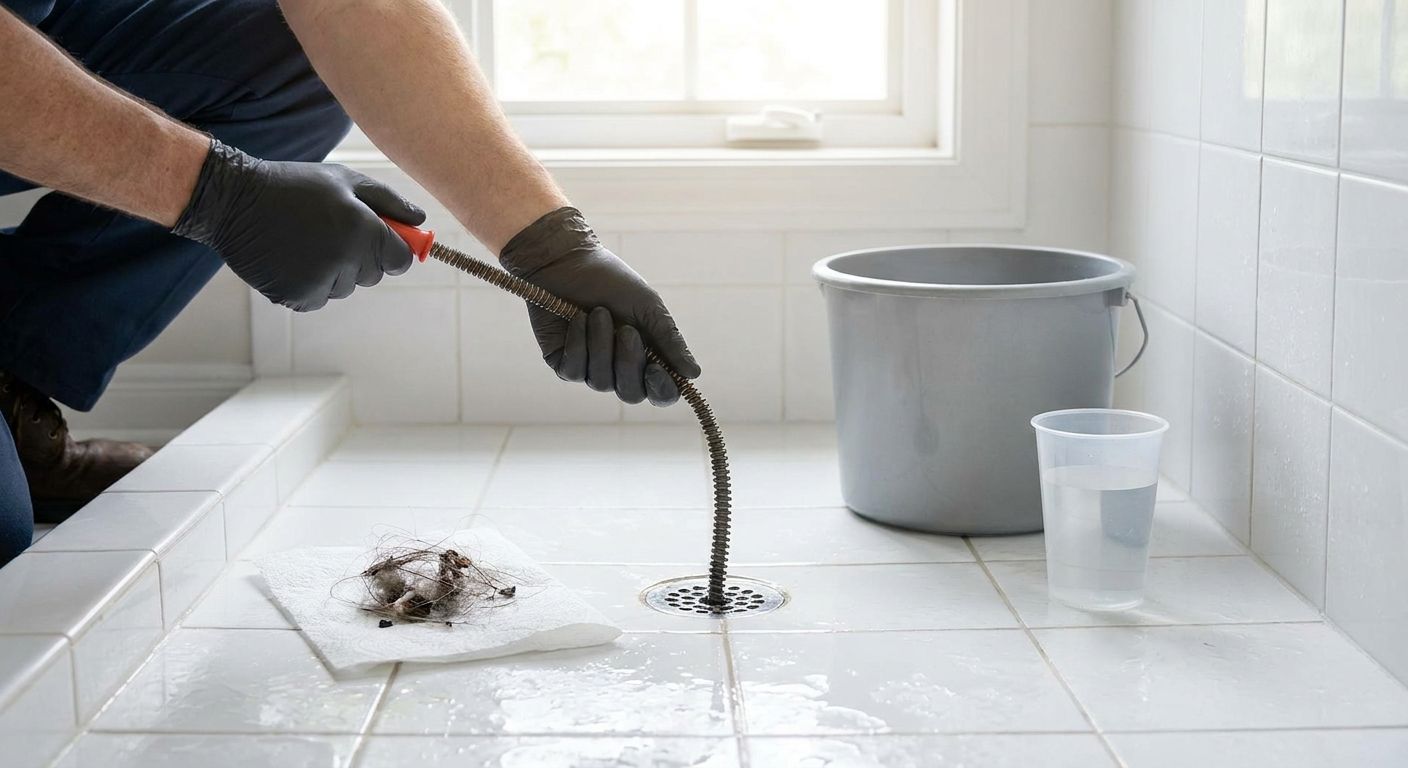
5. Feed the drain snake into the pipe
Insert a plastic drain snake with barbed hooks 15-20cm into the drain, twisting gently as you go. When you feel resistance, twist a few more times to snag the hair mass, then pull straight back out — don't yank sideways, it can snap the tool inside the pipe.
Expected outcome: you'll usually pull out a dense wad of hair and grey scum. Repeat two or three times, running water between passes to check progress.
6. Test with full water flow
Run the shower on full hot water for two minutes and watch the drain. A cleared drain should show no standing water around the strainer within 10-15 seconds of the water hitting the base.
If water still pools, or drains but gurgles loudly, the blockage sits further down the pipe than a hand snake reaches — that's the point to stop DIY.
Troubleshooting
Water drains but gurgles or bubbles: air is trapped behind a partial clog further down the branch line. Run the boiling water and vinegar treatment again; if the gurgle persists after two attempts, the clog is beyond snake reach.
Bad smell even after clearing the trap: a dry P-trap or a venting issue is letting sewer gas back up. Check whether the shower has been unused for weeks — running water for a few minutes often resolves it.
Snake won't feed past 20-30cm: you've hit a bend or a solid obstruction like a toy or a build-up of mineral scale. Forcing it risks damaging the pipe — this is when a licensed plumber with proper drain-clearing equipment should take over.
Blockage returns within weeks: repeated fast clogging usually means a structural issue, not a hair problem — collapsed pipe, root intrusion, or bellied pipe holding water and debris. This pattern is what how to prevent tree roots from blocking your drains covers in more detail.
Multiple drains backing up at once (shower, sink, toilet): this points to a blockage in the main line, not the shower branch. Stop pouring anything down any drain and call an emergency plumber before it overflows.
Water backs up into the bath when the shower runs: shared drainage lines are crossing somewhere and the main stack is likely partially blocked. This is a job for how to clear a blocked drain fast before it floods your home or a same-day callout.
Tools and resources
- Plastic drain snake (hardware store, under $15)
- Baking soda and white vinegar (pantry staples)
- A torch to inspect the drain visually before and after
- Rubber gloves — hair clogs are unpleasant, not dangerous, but gloves save the cleanup
- For anything beyond the trap, Apex Drain Plumbing runs licensed, insured drain clearing across Melbourne with upfront pricing, 24/7
Drain still blocked after DIY?
Licensed emergency plumbers across Melbourne, 24/7, upfront pricing.
What to do next
If the shower drain clears but you notice slow drainage in the bathroom sink or toilet around the same time, the problem likely sits in a shared line rather than the shower branch itself. Work through how to unblock a toilet without a plunger next to rule out a shared blockage before booking a plumber.
FAQ
How do you clear a blocked shower drain without chemicals?
Boiling water, baking soda, vinegar, and a plastic drain snake clear most shower blockages without commercial chemical cleaners. The combination softens soap scum and grease, then the snake physically pulls out the hair mass causing the clog.
What causes a shower drain to block in the first place?
Hair tangled with soap scum causes the vast majority of shower drain blockages, especially in homes with long hair or multiple daily users. Older Melbourne homes with rough-walled cast-iron or clay pipe fittings clog faster because scum sticks more easily to the pipe surface.
Is it bad to use drain cleaner chemicals every week?
Regular use of caustic drain cleaner damages older pipe joints and rubber seals over time, particularly in pre-2000s Melbourne plumbing. Baking soda and vinegar is a safer weekly maintenance option that won't corrode fittings.
How much does it cost to unblock a shower drain in Melbourne in 2026?
DIY tools cost under $20 and fix most surface-level hair clogs. Professional drain clearing for deeper or recurring blockages typically involves a callout plus labour, and pricing should always be confirmed upfront before work starts.
When should I stop trying to fix it myself and call a plumber?
Call a licensed plumber once water backs up in more than one fixture, the snake won't feed past 20-30cm, or the same blockage returns within weeks. Those patterns usually mean the clog sits deeper in the line or the pipe itself has a structural problem.
Can a blocked shower drain damage the bathroom floor?
Standing water from a blocked shower drain seeps through grout and floor waste seals over time, leading to softened subfloor and mould growth underneath tiles. Clearing the blockage within a day or two of noticing slow drainage avoids most of that damage.
Why does my shower drain smell bad even though it's not blocked?
A dry P-trap loses its water seal after periods of non-use, letting sewer gas rise up through the drain. Running water for a few minutes refills the trap and usually clears the smell within an hour.
Does a drain snake work on all shower drain types?
A plastic drain snake works on standard strainer and grate-style shower drains found in most Melbourne homes built after the 1980s. Tile insert drains with tight clearance sometimes need a thinner wire tool instead of the standard barbed plastic snake.
One last thing
Hair and soap scum rarely cause a full blockage on their own — they trap other debris (skin cells, shaving stubble, small bits of product packaging) that hardens the clog over 2026's warmer months when showers run longer. A five-minute baking soda and boiling water flush every fortnight keeps most Melbourne showers clog-free without ever needing the snake.