A toilet that never stops running usually comes down to one of two cheap parts failing inside the tank, and most Melbourne homeowners can fix it themselves in one sitting without calling a plumber.
- A worn flapper valve or a misadjusted float causes most running toilets, not a bigger tank problem.
- Set the fill valve float about 2.5cm below the overflow tube to stop constant refilling.
- A running toilet can waste up to 200 litres of water a day, so fixing it fast matters in 2026 water bills.
- If the flush handle, flapper and float all check out, the fill valve itself likely needs replacing.
- Apex Drain Plumbing handles the fix when the leak is inside the wall or under the slab, not just in the tank.
Why this matters
A toilet cistern that keeps trickling isn't a minor annoyance — it's a leak you're paying for every hour of every day in 2026.
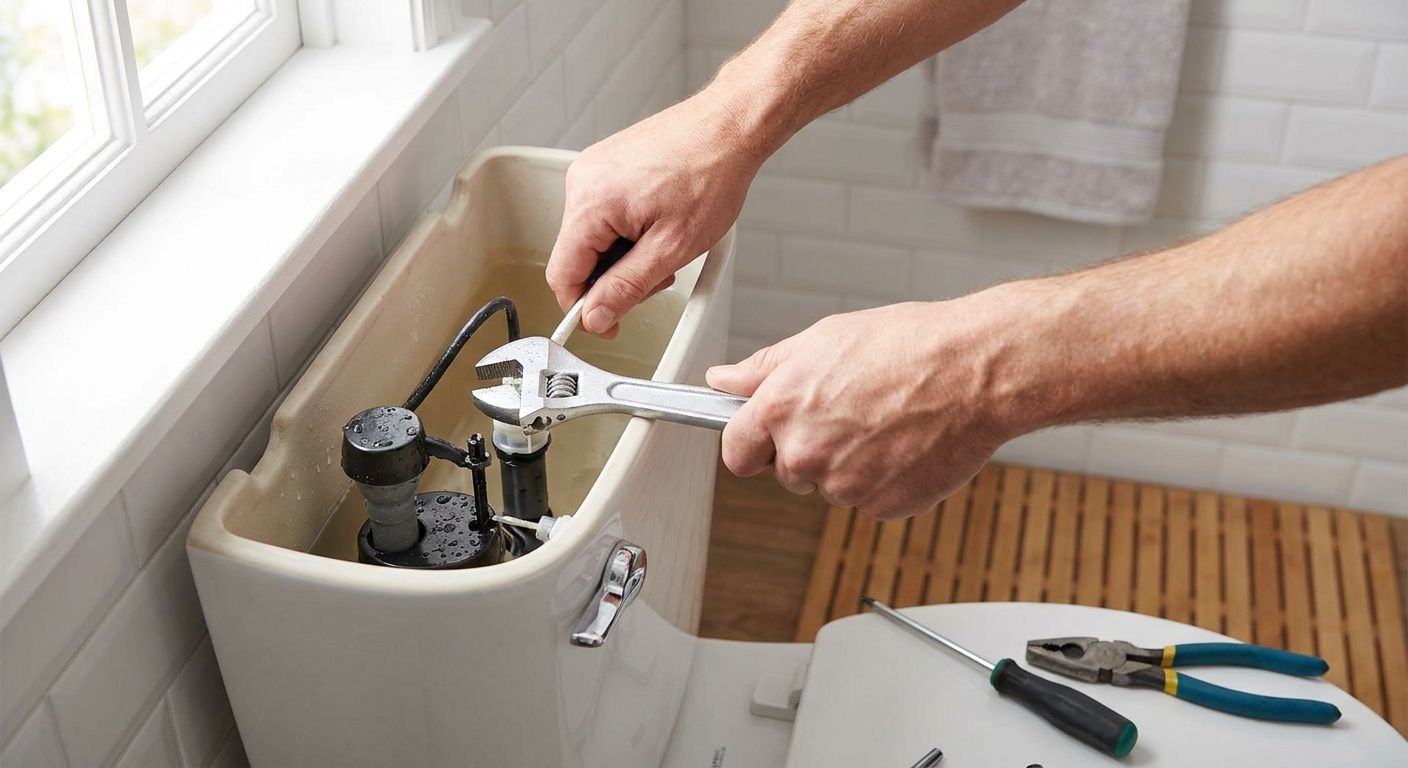
Most running toilets trace back to three parts: the flapper valve, the fill valve, or the float. None of them require special tools, and none require draining the whole bathroom.
Ignore it and the water bill creeps up quietly, sometimes by hundreds of litres a day according to Victorian water authority guidance on running fixtures. Fix it in one afternoon and the noise, the bill, and the guesswork disappear.
What you'll need
- Adjustable spanner or pliers
- A towel and small bucket (for tank water)
- A replacement flapper valve, sized to match your existing one
- A replacement fill valve (only if step 6 points to it)
- A torch, if your bathroom lighting is dim over the cistern
- 20-30 minutes of uninterrupted time
Most hardware stores stock universal flapper valves that fit the majority of Australian toilet cisterns made after the 1990s. Bring the old one with you if you're unsure of the size.
The steps
1. Turn off the water supply
Find the shut-off valve behind or beside the toilet and turn it clockwise until it stops. This isolates the cistern so you're not fighting incoming water while you work.
Flush once with the valve off to drain most of the tank, then hold the flush handle down to clear the rest. Skipping this step means working in a full tank of water, which makes every next step messier.
2. Lift the tank lid and inspect the flapper valve
Set the lid somewhere padded — porcelain lids crack on tile in one drop. Look at the rubber flapper sitting over the flush valve opening at the bottom of the tank.
Run a finger around its edge. If it feels slimy, warped, or brittle, that's your leak. Flappers typically harden and lose their seal within 3-5 years, especially in hard-water areas across Melbourne's east.
Common mistake: assuming the flapper is fine because it looks intact. A flapper can look whole and still fail to seal flat against the valve seat.
3. Check the fill valve and float height
The fill valve is the taller mechanism on the left side of most tanks, topped with a float (either a ball on an arm or a cup that rides up and down the shaft). Its job is to shut off water once the tank reaches the right level.
Watch the water line while the tank refills. If it climbs past the overflow tube and starts trickling in, the float is set too high or the valve itself isn't sealing.
4. Adjust or replace the flapper
Unclip the old flapper from its mounting pegs or lift it off the chain. Fit the replacement so it sits flush and centred over the valve seat, then reattach the chain with about 1cm of slack — too tight and it won't seal, too loose and it tangles.
This single swap resolves the majority of constantly running toilets. If the running stops as soon as the new flapper drops into place, you're done.
Common mistake: leaving the chain too short. A taut chain holds the flapper open a fraction, which reads exactly like a running toilet with a perfectly good new flapper.
5. Set the float to the correct height
Adjust the float so the water level sits roughly 2.5cm (about 1 inch) below the top of the overflow tube. Most modern fill valves have a screw or clip for this — older ball-and-arm types just need the arm bent slightly downward.
This stops water from ever reaching the overflow tube, which is the second most common cause of a toilet that runs non-stop.
6. Test the flush and listen for hissing
Turn the water supply back on, flush once, and let the tank refill fully. Stand quietly for two minutes and listen. Any hissing after the tank stops filling means water is still leaking past the flapper or fill valve.
An expected outcome: dead silence within 60 seconds of the tank reaching its normal level.
7. Check the overflow tube and reassemble
Confirm the overflow tube isn't cracked or sitting loose in its base — a hairline crack here mimics a running toilet even with a perfect flapper and float. Push it back into its seated position if it's shifted.
Replace the lid carefully and flush one more time to confirm everything holds.
Still running after the fix?
Apex Drain Plumbing covers Melbourne 24/7 for jobs beyond the tank.
Troubleshooting
- Toilet still runs after a new flapper — check the chain length and confirm the flapper model matches your flush valve size exactly; a slightly wrong fit never seals.
- Water trickles into the bowl but the tank looks full — the flapper seat itself may be corroded or scratched, which needs a full flush valve replacement, not just the flapper.
- Handle feels loose or sticks halfway — the lift arm inside the tank has likely bent or disconnected from the flapper chain; reattach and straighten it.
- Tank refills too slowly — the fill valve's water inlet may be partially blocked by sediment, common in older Melbourne homes; a quick clean of the valve inlet usually fixes it.
- Water pooling around the base of the toilet, not inside the tank — this points to a wax ring or floor-level leak, not a running toilet, and can sometimes signal a slab leak worth checking before it spreads.
- Ghost flushing at night — the tank is slowly losing water to the bowl through a worn flapper seal, then auto-refilling to compensate; replace the flapper as in step 4.
Tools and resources
- Universal flapper valve kit (hardware store or plumbing supplier)
- Adjustable spanner for the supply line nut
- If the same worn-seal logic is causing a dripping tap elsewhere in the house, the steps to stop a leaking tap before help arrives follow a similar shut-off-first approach
- If the toilet is blocked rather than running, unblocking a toilet without a plunger is a separate fix with its own steps
- Torch and towel for visibility and cleanup inside the tank
What to do next
If the flapper, float, and fill valve all check out fine and the toilet still runs, the issue is likely deeper in the flush valve assembly or the supply line itself — that's the point to call a licensed plumber rather than keep swapping parts. Apex Drain Plumbing handles these jobs across Melbourne on a 24/7 basis when a DIY fix doesn't hold.
FAQ
What is the most common reason a toilet keeps running?
A worn or misaligned flapper valve causes most constantly running toilets. It sits over the flush valve opening and fails to seal once the rubber hardens or warps, usually within 3-5 years of use.
How much does a running toilet cost in wasted water?
A running toilet can waste up to 200 litres of water a day according to Victorian water authority guidance. Over a billing cycle that adds up fast, which is why fixing it in 2026 pays for itself quickly.
Can I fix a running toilet myself without a plumber?
Yes, most running toilets are fixed with a new flapper valve or a float adjustment, both doable with basic tools. Call a plumber only if the fill valve, flapper, and float all check out and the noise continues.
How do I know if it's the flapper or the fill valve?
Watch the water level during refill — if it climbs above the overflow tube, the fill valve or float is misadjusted. If the tank refills to the right level but still hisses or trickles, the flapper isn't sealing.
Why does my toilet randomly run for a few seconds every hour?
This 'ghost flushing' happens when a worn flapper lets small amounts of water leak into the bowl, triggering the fill valve to top up the tank. Replacing the flapper usually stops it completely.
How high should the water level be in the toilet tank?
The water level should sit about 2.5cm (1 inch) below the top of the overflow tube. Any higher and water constantly drains into the tube, keeping the fill valve running.
Is a running toilet an emergency?
It's not urgent like a burst pipe, but it wastes water continuously and should be fixed within a day or two. If water starts pooling on the floor instead of staying in the tank, treat that as urgent.
How often should toilet flappers be replaced?
Most flappers last 3-5 years before the rubber hardens or cracks and stops sealing properly. Hard water areas around Melbourne tend to wear them out faster.
One last thing
The overflow tube crack gets missed more than any other cause on this list — homeowners replace the flapper twice, get frustrated, and never look at the tube itself. Check it first if you're on your second flapper in 2026 and the toilet is still running.